The death toll from Nepal’s weekend flash floods has climbed past 200, as rescue crews continue to pull bodies from mud-caked debris in the Kathmandu Valley. While the government maintains that alerts were issued, the sheer speed of the deluge appears to have rendered existing warning protocols useless.
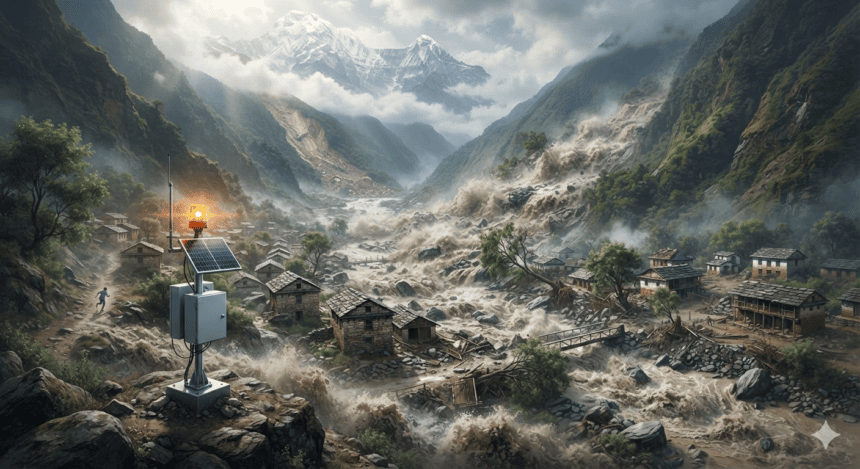
Hydrologists monitoring the Bagmati and Bishnumati rivers say the water didn’t just rise—it arrived as a wall. By the time sensors triggered automated sirens, entire neighborhoods were already submerged.
“The system is designed for gradual river swelling, not a sudden, debris-choked surge that moves faster than a runner,” said climate scientist Dr. Arjun Shrestha. “When the riverbed is already blocked by landslides upstream, the water doesn’t flow; it explodes outward.”
The government’s Department of Hydrology and Meteorology sent out SMS alerts to millions of mobile phones. For residents in the low-lying districts of Lalitpur and Bhaktapur, the messages arrived minutes before the water breached their walls. For many, that window provided just enough time to scramble to a roof—but not enough to escape the valley floor.
Critics point to a lack of investment in hyper-local, real-time monitoring. While the national network tracks major river basins, the “flash” element of these floods—often triggered by localized, intense cloudbursts—happens in smaller tributaries where infrastructure is virtually non-existent.
“We are relying on technology that tracks yesterday’s rain patterns to predict tomorrow’s disasters,” said a disaster management analyst based in Kathmandu. “The climate has changed, but our response time hasn’t.”
The Ministry of Home Affairs is now facing mounting pressure to explain why evacuation orders weren’t issued earlier. Officials argue that the intensity of the rainfall, which broke 50-year records in some stations, left little room for human intervention.
As the sun returns to the valley, the focus is shifting from rescue to the grim reality of cleanup. With thousands of homes destroyed and critical infrastructure severed, the government’s next battle isn’t just with the weather—it’s with a public that no longer trusts the sirens to sound in time.