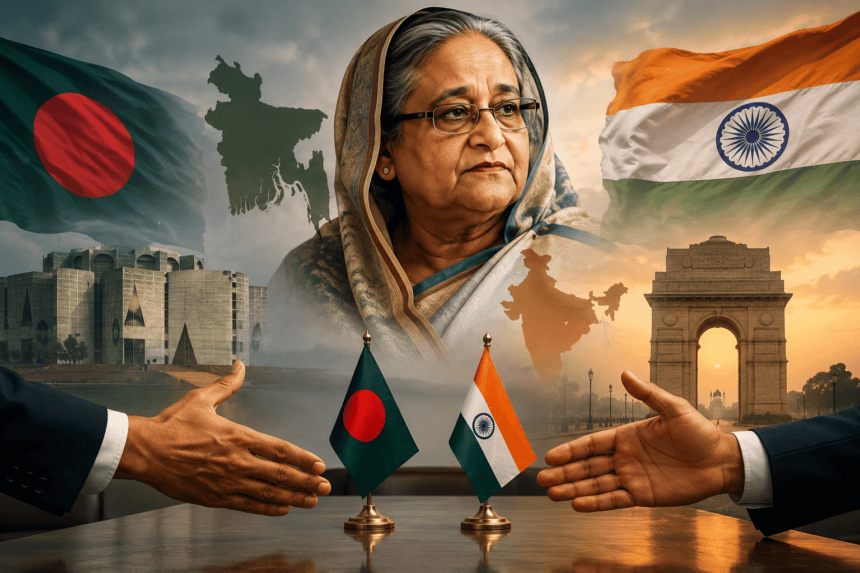
DHAKA — Bangladesh’s interim government has formally pressed India for a clear position regarding reports of ousted Prime Minister Sheikh Hasina’s intention to deliver a public address from New Delhi.
The request, communicated through diplomatic channels, comes as tensions simmer over Hasina’s continued presence in India following her abrupt resignation and flight from Dhaka on August 5. Foreign Affairs Adviser Md Touhid Hossain confirmed the move, signaling that Bangladesh views any political activity by the former leader from foreign soil as a potential provocation.
Hasina, who has been in India since fleeing mass protests that left hundreds dead, has remained largely out of the public eye. However, recent reports suggesting she may soon break her silence via a public speech have unsettled the interim administration led by Muhammad Yunus.
For Dhaka, the issue isn’t just about Hasina—it’s about the optics of her political activity while she faces dozens of criminal cases, including charges of murder and crimes against humanity. The interim government argues that if India provides her refuge on humanitarian grounds, allowing her to mobilize supporters or influence Bangladeshi politics undermines the spirit of that protection.
The Indian Ministry of External Affairs has maintained a cautious silence on the specifics of Hasina’s status, repeatedly stating only that she was granted entry on short notice for security reasons. New Delhi has been careful to avoid commenting on the internal legal battles currently playing out in Bangladeshi courts, where warrants for her arrest have already been issued.
This diplomatic friction highlights the delicate balancing act New Delhi faces. India has historically backed Hasina’s Awami League, viewing the party as a key security partner. Now, with the political landscape in Dhaka fundamentally transformed, Indian officials are navigating a difficult path: maintaining regional stability without alienating the new government or appearing to host a leader currently facing a domestic firestorm.
Whether New Delhi acknowledges the request or keeps its diplomatic cards close to the vest remains the central question. For the interim government in Dhaka, the answer will determine how much space they have to maneuver as they attempt to stabilize a fractured nation.
The ball is now in India’s court. How they respond—or if they choose to remain silent—will signal just how much the power dynamics between the two neighbors have shifted since August.