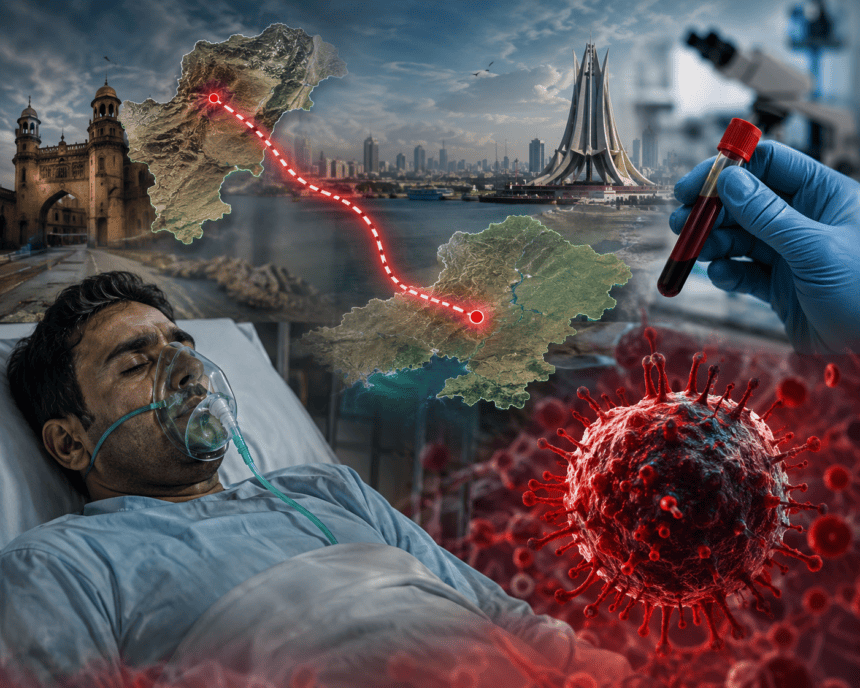
A patient from Quetta has tested positive for the Crimean-Congo Hemorrhagic Fever (CCHF) at a private hospital in Karachi, sparking fresh concerns among health authorities over the potential spread of the tick-borne disease.
The patient, whose identity remains protected for medical privacy, arrived in the city seeking specialized treatment after displaying classic symptoms of the virus, including high fever and internal hemorrhaging. Hospital staff immediately placed the individual in isolation, and provincial health officials are now scrambling to trace anyone who may have come into contact with the patient during their transit from Balochistan.
Congo fever is notoriously difficult to contain once it reaches urban centers. It transmits primarily through tick bites or contact with the blood and tissues of infected livestock. For those working in the cattle trade—especially with Eid-ul-Adha approaching—the risk profile jumps significantly.
Health experts have long warned that the lack of rigorous screening at provincial borders allows such cases to slip into Karachi undetected. While hospitals in the city are equipped to handle isolated cases, they lack the capacity to manage a broader outbreak should local transmission occur.
Sindh’s health department has issued an alert to all major hospitals, urging medical staff to strictly follow standard operating procedures for handling patients with viral hemorrhagic fevers. They’ve also directed cattle markets to implement immediate disinfection measures.
Despite these directives, the reality on the ground is often different. Many cattle handlers ignore basic protective gear, and local authorities rarely enforce the deep-cleaning protocols required at livestock transit points.
For now, the patient remains in critical condition. The focus shifts to the next 48 hours: identifying the source of exposure and ensuring that hospital staff and family members exposed to the patient receive immediate prophylactic care. If the contact tracing fails, the city’s already strained health infrastructure could face a much larger crisis.