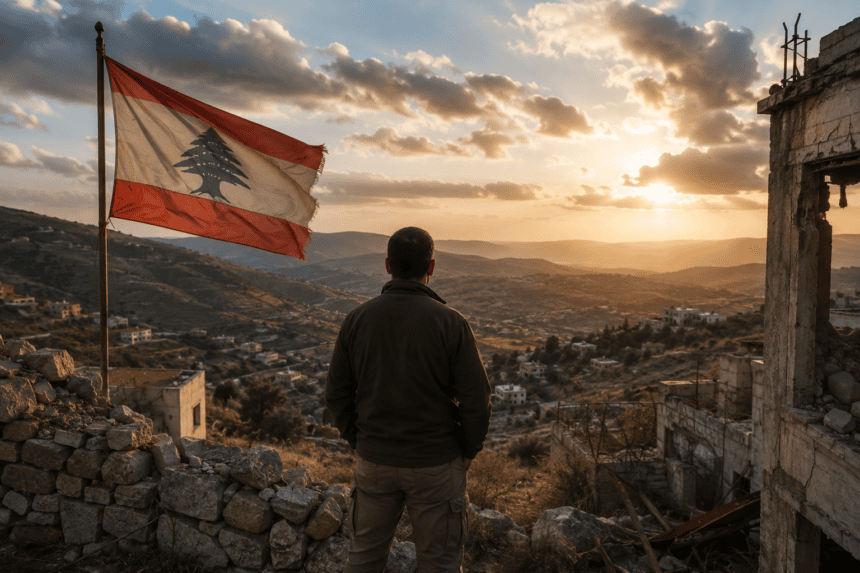
KHALDEH, Lebanon — Ali Mansour doesn’t look at the maps circulated by the Israeli military. He looks at the olive trees his grandfather planted in the hills overlooking the Mediterranean. As the Israeli military designates areas of southern Lebanon as “pilot zones” for potential ground operations, residents like Mansour are choosing to stay, betting their lives on the conviction that displacement is a permanent trap.
The designation of these zones has turned once-quiet agricultural villages into front-line buffers. For the Israeli military, these areas are tactical necessities to clear Hezbollah infrastructure. For the people living here, it is a forced eviction notice.
“They drop the leaflets, they send the texts, they want us to run,” Mansour said, standing near the edge of his orchard. “If we leave, we lose the deed to our history. This land will remain ours, whether we are standing on it or buried beneath it.”
The stakes go beyond simple property rights. In previous conflicts, the “buffer zone” strategy often resulted in scorched-earth tactics that left villages uninhabitable for years. Families who fled in 2006 often returned to find their homes reduced to concrete rubble and their fields salted with unexploded ordnance. That memory is fueling the current refusal to evacuate.
Local aid groups report that while the wealthy have long since cleared out, the working-class families—those who rely on seasonal harvests—have nowhere else to go. They are hunkered down in basements, relying on solar-powered generators and stockpiled flour. The scarcity of fuel means moving is a gamble; roads are frequently targeted by drone strikes, turning evacuation routes into potential death traps.
Military analysts tracking the border movements note that the “pilot zone” label is a psychological tool as much as a tactical one. By labeling an area a “zone,” the military shifts the legal framework of engagement, effectively turning any movement within those coordinates into a presumed hostile act. It simplifies the rules of engagement for drone operators and artillery crews, but it strips away the nuance of civilian presence.
“It’s a war of attrition where the civilians are the primary obstacle,” says a regional security consultant who asked to remain anonymous. “The military wants a sanitized zone. The residents are the human element that complicates that objective.”
For the international community, the situation is a diplomatic headache. Aid organizations are struggling to negotiate humanitarian corridors, but the “pilot zone” status creates a legal gray area. Neither side is willing to guarantee safe passage, leaving thousands trapped in a shrinking circle of safety.
As the sun sets over the valley, the sound of low-flying aircraft is a constant, jagged rhythm. Mansour isn’t packing a bag. He’s checking the perimeter of his fence. He knows the risks, but for him, the alternative is a life of exile in a tent city—a reality he refuses to accept as long as his feet are still on his own soil.