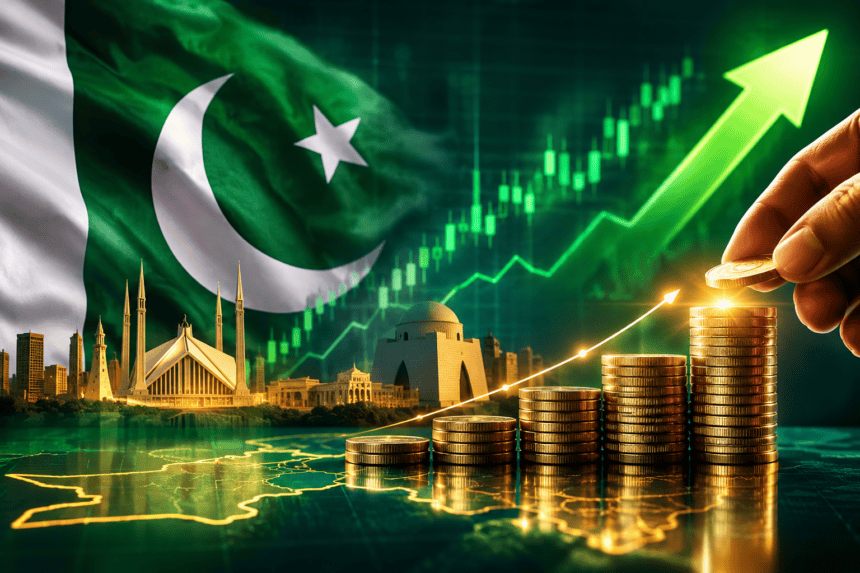
S&P Global Ratings has upgraded Pakistan’s long-term sovereign credit rating to ‘B’ from ‘CCC+’, citing improved external liquidity and a reduction in immediate default risks. The move, announced late Tuesday, signals a shift in international market sentiment toward Islamabad as the country attempts to stabilize its volatile economy.
The upgrade reflects the success of the $7 billion Extended Fund Facility (EFF) recently secured from the International Monetary Fund. Analysts point to the program as a primary driver for replenishing foreign exchange reserves, which have climbed from precarious lows to levels that offer at least a temporary buffer against external shocks.
Yet, the rating remains in speculative territory. The agency acknowledged that while the immediate risk of default has receded, the government’s fiscal position remains fragile. Debt-servicing costs continue to consume a massive portion of the national budget, leaving little room for the kind of infrastructure or social spending needed to spark genuine growth.
“The upgrade is a recognition of the policy continuity we’ve maintained over the last year,” a senior official at the Finance Division said, requesting anonymity to speak freely on market reactions. “But the real challenge isn’t the rating—it’s the tax-to-GDP ratio. Without structural reform, this is just a bandage, not a cure.”
The S&P report highlights that Pakistan’s ability to meet its external obligations depends heavily on sustained policy implementation. The government faces a narrow path: it must satisfy IMF reform mandates—which often involve unpopular energy price hikes and tax expansions—without triggering significant civil unrest.
Recent data shows that inflation has cooled from its 38% peak last year, providing some relief to households. However, the cost of living remains high, and real wages have stagnated. Business leaders argue that the improved rating should theoretically lower borrowing costs for the private sector, but with interest rates still high, credit remains prohibitively expensive for most local industries.
For the incumbent administration, the rating upgrade is a win, but it’s one that brings fresh pressure. International lenders are watching closely to see if the government will follow through on its promises to broaden the tax net to include retail and agricultural sectors.
Pakistan has now moved out of the “junk” status that threatened its access to international capital markets. Whether this translates into actual foreign direct investment or remains a mere statistical improvement depends on how the government navigates the next two quarters of fiscal consolidation.