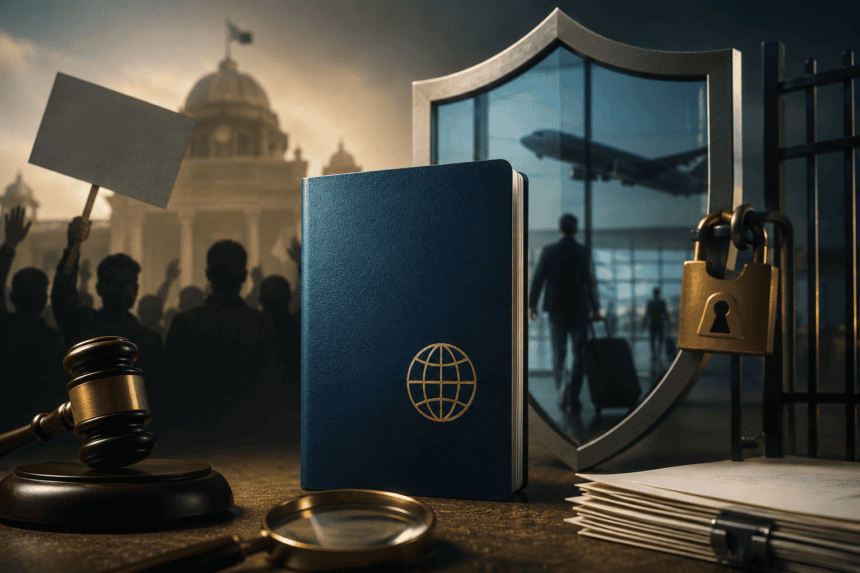
The state minister for interior affairs has backtracked on a controversial proposal to ease blue passport eligibility, announcing instead that the government will implement stricter vetting procedures for all applicants.
The decision follows a week of intense public outcry and legislative pushback. Critics argued that the original plan—which would have expanded passport access to a wider pool of government contractors and mid-level officials—opened the door for abuse and undermined the prestige of the document.
“We listened to the feedback,” the minister told reporters during a press briefing Wednesday. “The integrity of our travel documents is non-negotiable. We are shifting focus from expansion to tightening the verification protocols.”
Under the new framework, applicants must now provide verifiable proof of official cross-border travel requirements related to their specific job descriptions. Previously, a simple letter of recommendation from a department head was sufficient for processing.
The interior ministry will also introduce a mandatory background audit conducted by an independent security firm for every blue passport file. This adds a layer of scrutiny that previously didn’t exist for state-level officials.
While the minister insists these measures will streamline the process for “genuine” state business, labor unions representing lower-tier civil servants have already voiced concerns. They fear the new “stringent” requirements will create a bureaucratic bottleneck, effectively freezing travel for staff who need to attend international conferences and training programs.
The ministry expects the new guidelines to be published in the official gazette by Monday. Until then, all pending applications for blue passports remain under a temporary freeze.
The minister’s pivot is a tactical retreat meant to quiet a growing political scandal. Whether these tighter rules satisfy critics or simply create new hurdles for the state machinery remains the central question as the rollout begins.