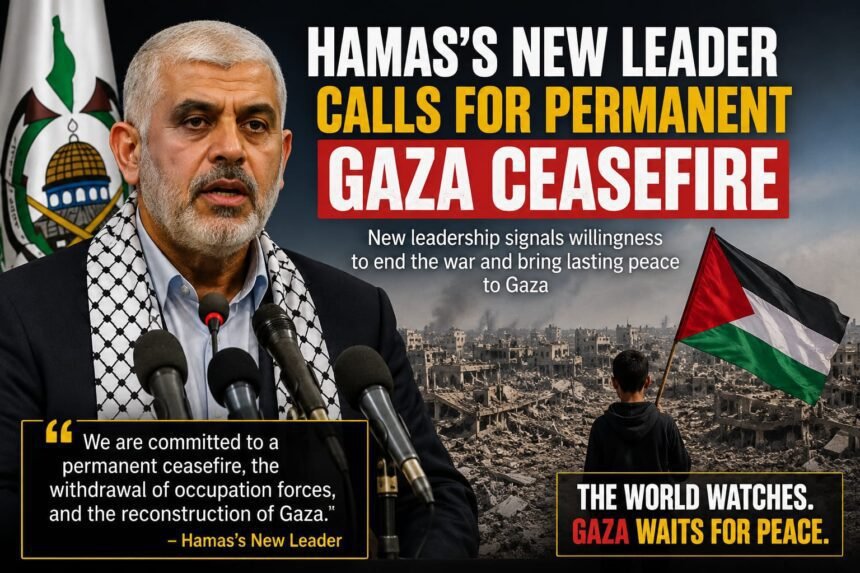
Gaza City, July 22, 2026: Hamas’s newly elected political leader, Khalil al-Hayya, has called for a permanent ceasefire in the Gaza Strip, marking his first public address since taking over the leadership of the Palestinian group. His remarks come amid continuing regional efforts to end the nearly three-year conflict between Israel and Hamas.
Al-Hayya said that Hamas is prepared to support a lasting ceasefire agreement if it guarantees a complete end to military operations, the withdrawal of Israeli forces from Gaza, unrestricted humanitarian aid, and progress toward the reconstruction of the territory. He stressed that any agreement must provide long-term security and dignity for the Palestinian people rather than a temporary pause in fighting.
The new Hamas leader also urged international mediators—including Qatar, Egypt, Turkey, and the United States—to intensify diplomatic efforts to achieve a comprehensive peace agreement. He argued that a permanent ceasefire would help alleviate Gaza’s worsening humanitarian crisis, where millions continue to face shortages of food, clean water, medical supplies, and shelter.
Al-Hayya was recently elected as Hamas’s overall political chief following the death of former leader Yahya Sinwar. Analysts say his appointment signals continuity in Hamas’s political and military strategy, although his latest statement indicates that the group remains publicly open to negotiations over a lasting ceasefire under conditions it considers acceptable.
Israel has not immediately issued a formal response to Al-Hayya’s latest appeal. Previous negotiations between the two sides have repeatedly stalled over major issues, including the release of hostages, the future governance of Gaza, Israeli military withdrawals, and the disarmament of Hamas. International mediators continue to work toward a broader agreement, but significant differences remain.
The latest appeal for a permanent ceasefire comes as humanitarian organizations and several governments continue to urge all parties to reach a sustainable agreement that would end the violence, protect civilians, and allow large-scale humanitarian assistance and reconstruction efforts to move forward.