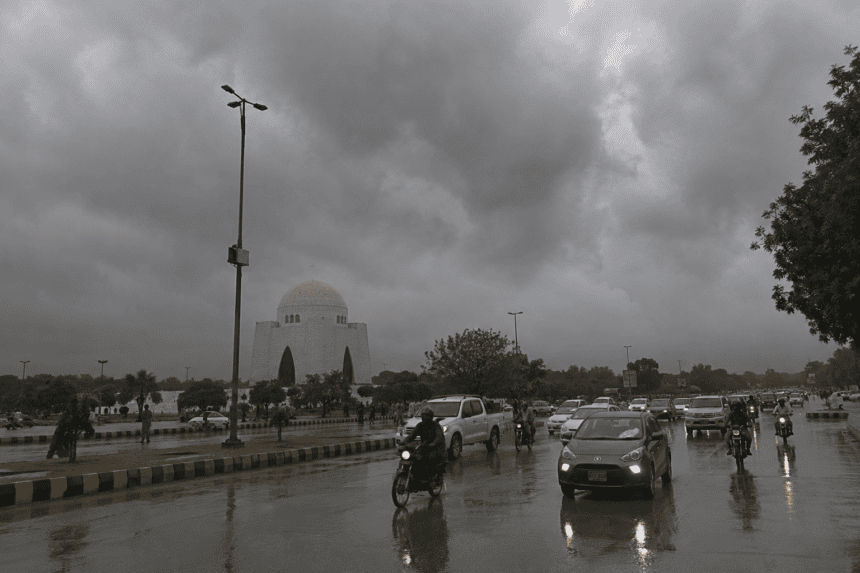
The Provincial Disaster Management Authority (PDMA) has issued a high-alert notice for Sindh, warning of widespread rain and thunderstorms starting today. The weather system, expected to persist through the weekend, threatens to disrupt urban centers and rural infrastructure across the province.
Karachi, Hyderabad, and surrounding districts are in the direct path of the incoming system. Forecasters expect the heavy downpours to trigger urban flooding in low-lying areas—a recurring crisis that the city’s aging drainage infrastructure remains ill-equipped to handle.
The PDMA directive mandates that district administrations mobilize emergency response teams immediately. They’ve ordered the deployment of de-watering pumps in vulnerable areas, particularly across Karachi’s central and district south zones, to prevent the stagnation that paralyzed the city during the previous monsoon cycle.
“The alert is active across the board,” a PDMA spokesperson told reporters this morning. “We are coordinating with local municipal bodies to ensure that emergency machinery is positioned where it’s needed most.”
Beyond the urban centers, the alert carries significant risks for Sindh’s agricultural belt. Farmers are being advised to take precautions to protect standing crops, as sudden storms often accompany these meteorological shifts, bringing high-velocity winds capable of damaging infrastructure and power grids.
The Pakistan Meteorological Department (PMD) confirmed the arrival of a moist current from the Arabian Sea, which is interacting with a western disturbance over the upper regions of the country. This collision of air masses is the primary driver behind the intensity of the projected rainfall.
While the PDMA has signaled readiness, the efficacy of these preparations will be tested as soon as the first heavy cloudburst hits. For millions of residents, the coming 48 hours will be a difficult exercise in navigating flooded streets and potential power outages.
The authority’s message to the public is simple: stay indoors, keep clear of electrical poles and billboards, and monitor official updates as the weather develops.