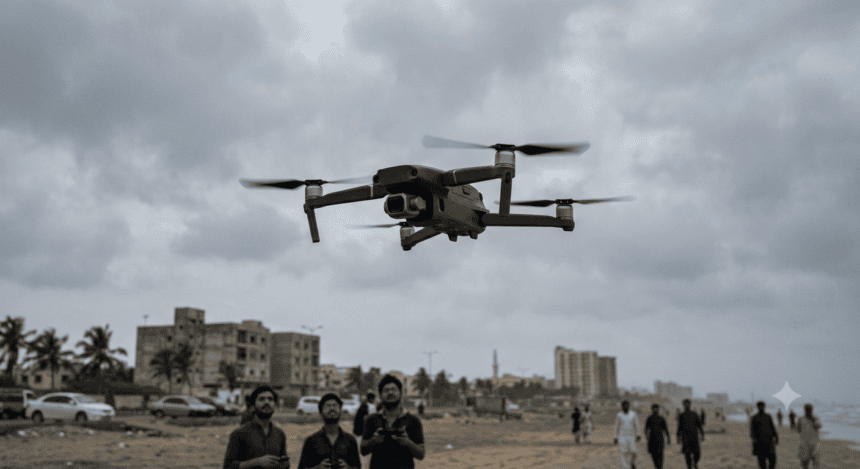
Local authorities have extended Section 144 across the city, citing persistent security concerns. The order, which prohibits public gatherings of more than four people, now includes a strict 30-day ban on all outdoor drone activity.
Police officials issued the directive late Tuesday, signaling a shift in security protocols ahead of anticipated political activity and public events. The drone ban applies to both commercial and recreational operators, with law enforcement warnings that unauthorized flights will result in immediate confiscation of equipment and potential criminal charges.
The move follows a series of intelligence reports suggesting that unmanned aerial vehicles could be used to monitor sensitive government installations or disrupt public order. While the administration frames this as a preemptive measure, the broad scope of the ban has frustrated local media houses and event organizers who rely on drones for standard operations.
“We cannot compromise on security when the threat environment is this volatile,” a senior police spokesperson said during a brief press briefing. He declined to specify exactly which intelligence inputs triggered the 30-day mandate, noting only that the department is working to “neutralize potential surveillance risks.”
Section 144 remains a blunt instrument in the city’s administrative toolkit. Critics argue the repeated extensions undermine local commerce and limit civic space, yet the administration continues to lean on the law to manage crowd control and limit protest activity.
For the next month, the skyline—often filled with hobbyist drones and commercial camera crews—will be restricted. The police have instructed local stations to monitor airspace over high-security zones and public squares, promising a “zero-tolerance” approach to any aerial activity.
Whether this month-long clampdown will actually mitigate security risks or merely stifle routine activity remains the core point of contention between the administration and the public. For now, the airspace is closed.