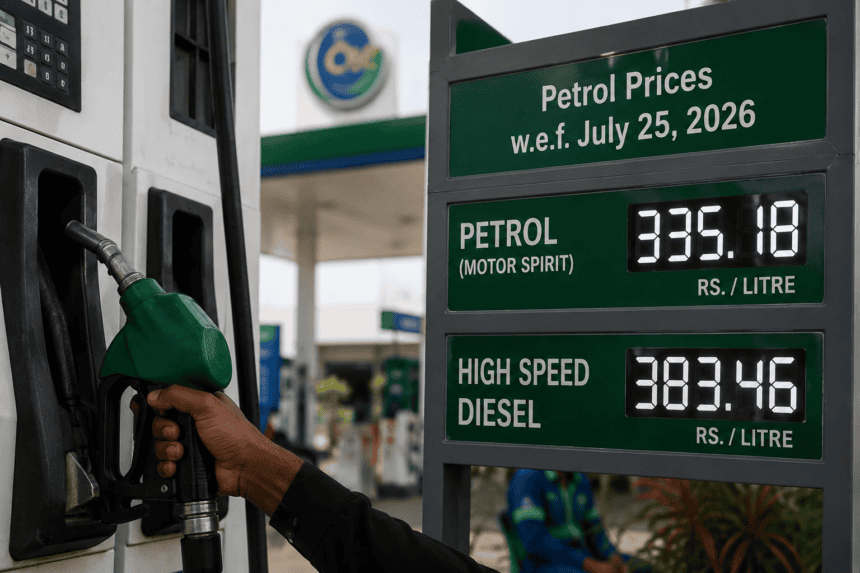
Pakistan’s finance ministry announced a significant reduction in fuel prices late Friday, bringing the cost of petrol down by Rs 15 per liter effective July 25, 2026. The move follows two consecutive fortnights of stagnation and provides a rare reprieve for commuters battling persistent inflation.
High-speed diesel also saw a downward adjustment, dropping by Rs 12 per liter. The revised rates reflect the recent cooling of global oil benchmarks and a slight stabilization of the rupee against the dollar.
For the average household, the math is straightforward: a full tank now costs roughly 7% less than it did yesterday. However, transport unions remain skeptical. Despite the price drop at the pump, public transport fares have yet to see a corresponding decline, leaving many workers paying pre-reduction rates for their daily commute.
“We’ve seen the retail price drop, but the cost of moving goods hasn’t budged,” said Arshad Khan, a regional logistics coordinator in Lahore. “Until the freight costs follow the fuel price down, the common man won’t feel the full benefit of this relief.”
The government’s decision to pass on the savings comes as the administration faces mounting political pressure to address the cost-of-living crisis. Finance ministry officials confirmed the new rates were calculated based on the average import price of refined petroleum products over the last 14 days, rather than the volatile spot market.
While the reduction offers immediate relief, energy analysts warn that the volatility of the global market makes this a temporary win. With geopolitical tensions in the Middle East still threatening supply chains, the ministry’s ability to sustain these lower prices remains tied to factors far beyond the local economy.
For now, the lower rates are locked in for the next fortnight. Whether that translates to lower prices on grocery shelves or remains confined to the gas station pump is the question currently dividing economists and the public.