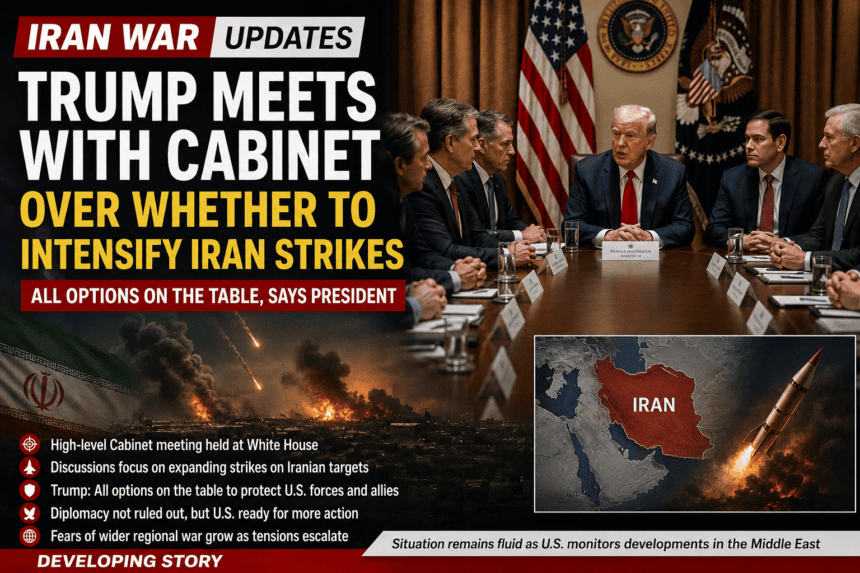
Washington, D.C.: President Donald Trump convened a high-level Cabinet meeting on Friday to review the rapidly evolving conflict with Iran, as his administration weighs whether to expand ongoing U.S. military operations against Iranian targets. The meeting brought together top national security officials, including the Defense Secretary, Secretary of State, Chairman of the Joint Chiefs of Staff, and senior intelligence advisers to assess military options and the latest intelligence from the Middle East.
According to U.S. officials, the discussions focused on whether additional strikes should target a broader range of Iranian military infrastructure following recent exchanges of missile and drone attacks. While no final decision was announced, President Trump said all options remain on the table and stressed that the United States would respond forcefully to any threats against American forces or allies in the region.
The Cabinet meeting comes after U.S. forces carried out fresh strikes on facilities linked to Iran’s Revolutionary Guards. Iran responded by launching retaliatory attacks against U.S. military positions and warning that any further escalation would trigger a stronger response. The growing conflict has heightened fears of a wider regional war involving several Middle Eastern countries.
Despite the military buildup, President Trump indicated that diplomacy has not been completely ruled out. He said his administration remains willing to consider negotiations if Iran takes meaningful steps to reduce tensions, though he emphasized that the United States is fully prepared for further military action if necessary.
International leaders have urged both Washington and Tehran to exercise restraint, warning that continued escalation could threaten global energy supplies and regional stability. Oil prices have risen sharply amid concerns over shipping routes in the Persian Gulf and the Red Sea, while governments across Europe and the Middle East continue diplomatic efforts to prevent the conflict from expanding.
Military analysts say the outcome of the White House deliberations could shape the next phase of the conflict, with any decision to intensify strikes likely to have significant consequences for regional security, international diplomacy, and global financial markets. Officials said the situation remains under constant review as the administration monitors developments on the ground.