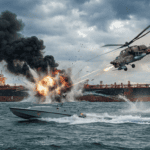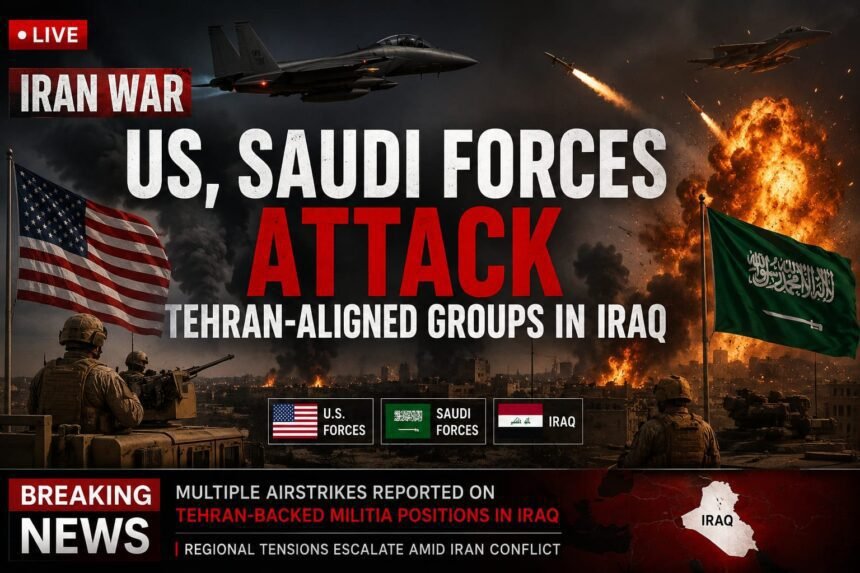
WASHINGTON/BAGHDAD/RIYADH – July 29, 2026: The United States and Saudi Arabia launched coordinated military strikes against Iran-backed armed groups in Iraq on Wednesday, marking another major escalation in the ongoing regional conflict between Washington and Tehran. The operation came after a series of missile and drone attacks allegedly carried out by Iranian-backed militias against U.S. forces and Saudi infrastructure.
According to the U.S. Central Command (CENTCOM), the strikes targeted weapons depots, logistics hubs, and command facilities used by Tehran-aligned militias operating inside Iraq. U.S. officials said the operation was conducted in coordination with Saudi Arabia and was intended to prevent further attacks on American troops and critical Saudi energy installations.
Saudi Arabia’s Ministry of Defence confirmed its participation in the operation, stating that the strikes were a response to recent drone attacks targeting the Kingdom. Riyadh described the mission as a defensive measure aimed at protecting national security and regional stability.
The military action followed reports that Iran’s Islamic Revolutionary Guard Corps (IRGC) launched a surprise ballistic missile attack against U.S. forces in the region. U.S. officials said the missiles were intercepted and no major casualties were reported, but warned that any further aggression would be met with a decisive response.
Iran has not officially acknowledged responsibility for the attacks, while Tehran has repeatedly warned that it will respond to any military action threatening its interests. Iran also reiterated that it would take “any action necessary” to safeguard its strategic position, including control over the Strait of Hormuz, a vital global oil shipping route.
The latest developments have significantly raised tensions across the Middle East, with fears that the conflict could spread further into Iraq, Syria, and the Gulf region. International observers have expressed concern that continued military exchanges could threaten global energy supplies and regional security.
The United Nations and several world powers have urged all parties to exercise restraint and return to diplomatic negotiations to avoid a broader regional war. Meanwhile, military forces across the Gulf remain on heightened alert as the situation continues to evolve.