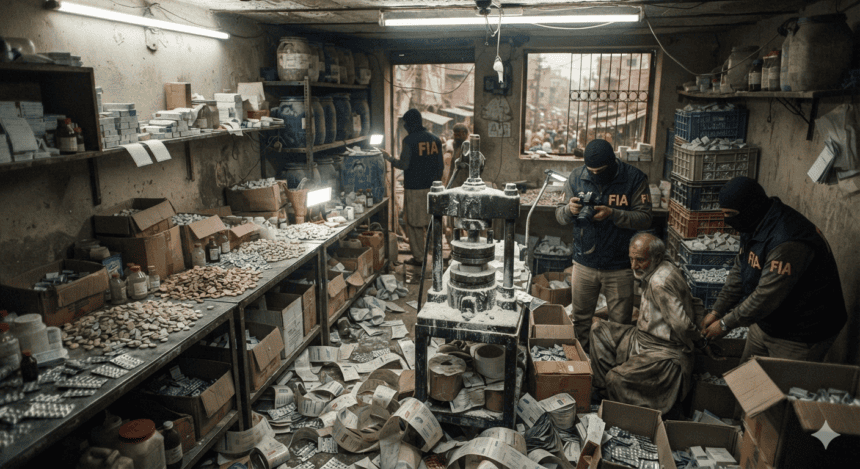
KARACHI — Federal Investigation Agency (FIA) agents raided a nondescript warehouse in the city’s industrial district yesterday, uncovering an industrial-scale operation producing counterfeit versions of life-saving antibiotics and painkillers.
The bust followed weeks of surveillance by intelligence units tracking the movement of raw chemical powders into the site. Inside, officials found high-speed tableting machines, counterfeit packaging materials for major pharmaceutical brands, and thousands of blister packs ready for distribution to pharmacies across Sindh.
The operation was sophisticated. The suspects weren’t just printing labels; they were replicating the exact chemical composition of placebos and substandard drugs, effectively flooding the local market with pills that look identical to genuine medicine but offer zero therapeutic value.
For a city already struggling with a fractured healthcare supply chain, the implications are severe. Patients suffering from chronic conditions or acute infections may have spent their last savings on medication that won’t work — or worse, could cause toxic reactions.
“This wasn’t a small-time setup,” said an FIA official familiar with the raid. “They had the printing plates, the industrial blenders, and a distribution network that reached deep into the retail market. We are now tracing the source of the raw materials.”
Health regulators have issued an emergency alert, urging pharmacies to verify their inventory against batch numbers released by the manufacturers of the targeted brands. However, the sheer volume of fake stock already in circulation makes a total recall a logistical nightmare.
This is the third major counterfeit pharmaceutical bust in Karachi this year, pointing to a systemic failure in supply chain oversight. While the arrests made yesterday will disrupt the immediate supply, the broader issue of how these factories operate undetected in plain sight remains.
The suspects are currently in custody. For the thousands of residents who unknowingly bought these pills, the damage to their health may not be known for weeks.