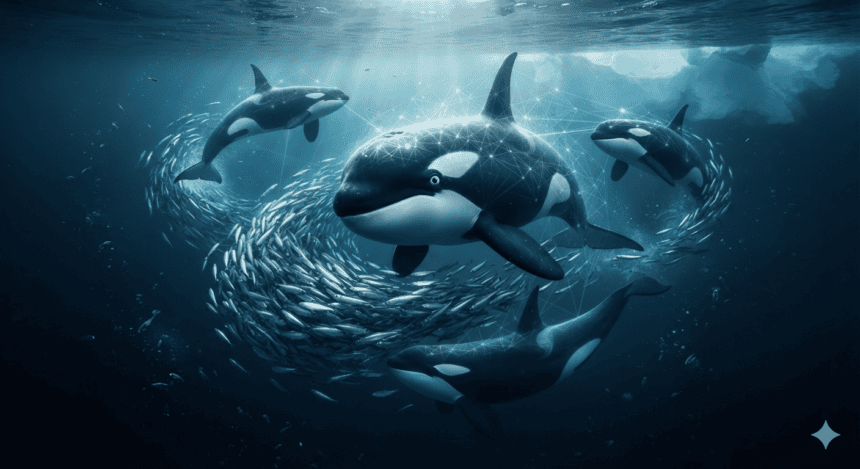
Scientists have uncovered new insights into the remarkable intelligence and hunting behavior of orcas, also known as killer whales, revealing how these marine mammals use sophisticated communication, teamwork, and problem-solving skills to survive in the world’s oceans.
According to marine biologists, recent studies involving drones, underwater cameras, satellite tracking, and acoustic recordings have provided a clearer picture of how orcas cooperate while hunting. Researchers observed that different pods use unique strategies depending on their environment and prey, demonstrating a level of cultural learning rarely seen in the animal kingdom.
Scientists say orcas are among the most intelligent marine mammals, possessing large brains, strong social bonds, and advanced communication abilities. They live in close-knit family groups, known as pods, where knowledge and hunting techniques are passed down from one generation to the next.
Research has shown that orcas employ a variety of hunting methods. Some create powerful waves to wash seals off floating ice, while others work together to herd schools of fish into tight groups before taking turns feeding. Certain populations have even been observed hunting sharks and large whales using carefully coordinated attacks.
Experts believe these behaviors demonstrate not only intelligence but also planning, cooperation, and the ability to adapt to changing environments. Scientists also found evidence that different orca populations have distinct vocalizations and social traditions, suggesting they possess unique cultures similar to those found in some primates.
Researchers emphasize that studying orcas helps improve understanding of marine ecosystems and predator-prey relationships. The findings may also contribute to conservation efforts, as many orca populations face growing threats from climate change, ocean pollution, declining fish stocks, underwater noise, and habitat degradation.
Marine scientists hope continued research using advanced technology will reveal even more about how these apex predators communicate, learn, and interact with one another, further highlighting the complexity of life beneath the ocean’s surface.۔