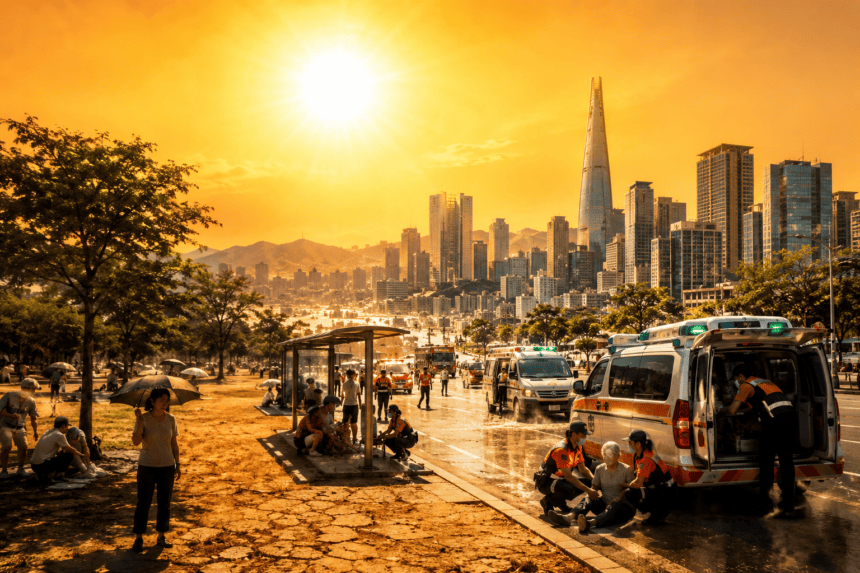
Sixteen people have died from heat-related illnesses across South Korea this summer, according to the Ministry of the Interior and Safety. The fatalities reflect a month of record-breaking humidity and temperatures that have consistently pushed past 35 degrees Celsius (95 degrees Fahrenheit) in most parts of the country.
Most of the victims were elderly individuals working outdoors in rural areas. Despite repeated government warnings to avoid field work during peak afternoon hours, the demographic most vulnerable to heat exhaustion remains the hardest to reach.
The Korea Meteorological Administration hasn’t offered much relief. A nationwide heatwave warning remains in effect, with humidity levels exacerbating the “felt” temperature. In Seoul, the urban heat island effect is keeping nighttime temperatures high, preventing the usual overnight cooling that allows the body to recover from daytime stress.
Health officials are tracking a sharp uptick in emergency room visits. More than 1,500 people have been treated for heat cramps, exhaustion, or stroke since late May. That figure is already tracking significantly higher than this time last year.
The government’s response has been reactive. The Interior Ministry has expanded its emergency operations, deploying cooling mist systems in public squares and distributing water and salt tablets to vulnerable populations. Yet, for many in the agricultural sector, these measures are arriving too late.
Climate scientists point to the shifting patterns of the monsoon season as the culprit. This year’s humidity is trapping heat in a way that makes physical exertion dangerous, even for those accustomed to the summer climate.
As the heatwave persists, the focus is shifting to whether current public infrastructure—much of it built for cooler summers—can handle the new, harsher reality of the Korean peninsula. For now, the ministry is sticking to its standard advice: stay indoors, stay hydrated, and stay out of the sun. But with the peak of the heat season still ahead, that advice is increasingly colliding with the economic necessity of those who have to work to survive.