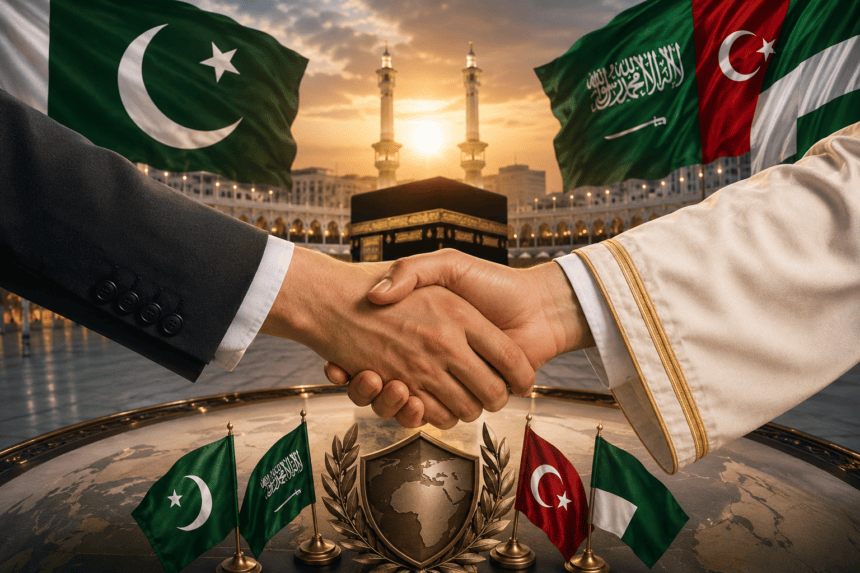
President Asif Ali Zardari has officially signaled Pakistan’s commitment to the Makkah Joint Defence Agreement, framing the pact as a cornerstone for regional stability. The endorsement follows high-level diplomatic exchanges between Islamabad and Riyadh, focusing on shared security architecture in an increasingly volatile Middle East.
The agreement aims to formalize intelligence sharing, joint military training exercises, and counter-terrorism coordination. For Pakistan, the move signals a pivot back toward its traditional strategic partner, prioritizing long-term security guarantees over the fluid, often unpredictable, regional alliances of the last decade.
“Our security interests are inseparable,” Zardari told aides during a briefing at the Presidency on Wednesday. He emphasized that the framework isn’t just a military arrangement but a necessary response to emerging threats that ignore national borders.
The timing is telling. With regional tensions spiking, both Islamabad and Riyadh are looking to project a unified front. Analysts suggest the agreement serves as a deterrent, though the specific operational details remain shielded from public view. Critics, however, are already asking about the cost—specifically, whether this deeper integration will strain Pakistan’s delicate balancing act between Saudi Arabia and Iran.
The military establishment in Rawalpindi has been a primary architect of this deal, working behind the scenes to align the two nations’ tactical requirements. The presidency’s formal backing provides the political cover needed to move past the diplomatic hesitation that stalled similar proposals in previous years.
While the government touts this as a win for national security, the parliament remains largely in the dark on the finer points of the deployment protocols. Zardari’s move locks Pakistan into a commitment that will likely define the country’s foreign policy trajectory for the remainder of his term.
Whether this agreement shifts the regional power balance or simply adds another layer of bureaucracy to existing defense ties is the central question. For now, the administration is betting that a closer embrace of the Makkah framework provides the leverage Pakistan needs to navigate its current economic and security crossroads.