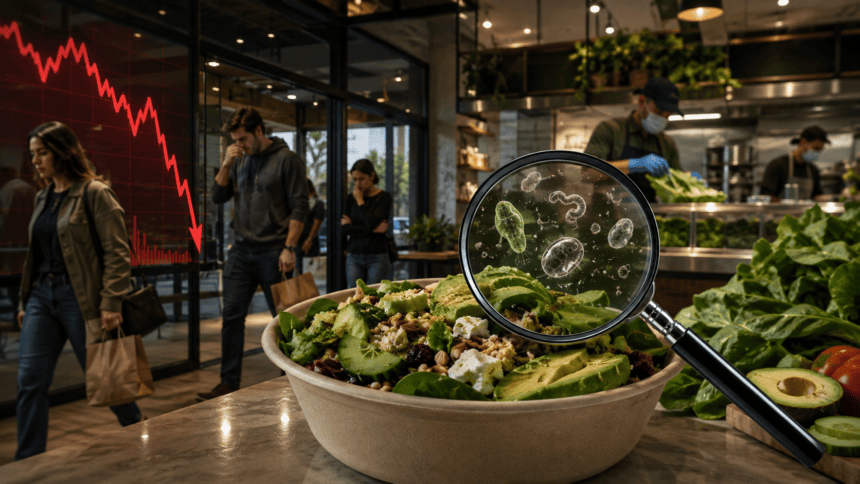
Sweetgreen shares fell sharply in pre-market trading Tuesday after the fast-casual chain slashed its annual earnings forecast, citing a supply chain disruption linked to a potential cyclosporiasis outbreak. The company confirmed that a specific greens supplier was flagged for possible contamination, forcing an immediate pivot to alternative sourcing.
While the chain hasn’t reported any confirmed illnesses among customers, the financial fallout is immediate. Management lowered its full-year revenue outlook, acknowledging that the scramble to replace its supply lines is hitting margins harder than expected. Investors reacted swiftly, wiping millions off the company’s market capitalization as concerns mount over how long the operational bottleneck will persist.
The parasite, *Cyclospora cayetanensis*, causes intestinal illness—a nightmare scenario for a brand built entirely on the promise of fresh, raw produce. For Sweetgreen, the stakes go beyond the current stock dip; the company has spent years cultivating a premium reputation based on transparency and “farm-to-table” sourcing. A supply chain failure of this magnitude threatens the core of that identity.
“We took the precautionary step to pause shipments from a specific grower,” CEO Jonathan Neman told analysts during an emergency briefing. He characterized the move as a “proactive safety measure,” but the market isn’t buying the calm tone. The logistics of replacing verified, organic-standard greens on short notice are costly, and those costs are now being passed directly to the bottom line.
This isn’t the first time the industry has faced such a hurdle, but for a growth-stage company like Sweetgreen, the timing is brutal. The chain has been aggressively trying to prove it can scale its menu while maintaining high margins. This disruption forces them to lean on backup suppliers, which typically come at a higher price point and with less favorable contract terms.
For now, the company is betting that transparency will preserve customer loyalty. They’ve promised to keep the menu intact, even if it means thinner profits for the next two quarters. Whether that gamble pays off depends on how quickly they can stabilize their supply chain—and whether the public perceives this as a responsible safety check or a sign of a larger, systemic weakness in their sourcing model.
As of Tuesday’s bell, the stock remained under heavy pressure, with traders eyeing any further updates from the FDA regarding the specific farms involved. For Sweetgreen, the priority is clear: keep the salad bowls full and keep the headlines focused on food safety, not food poisoning.