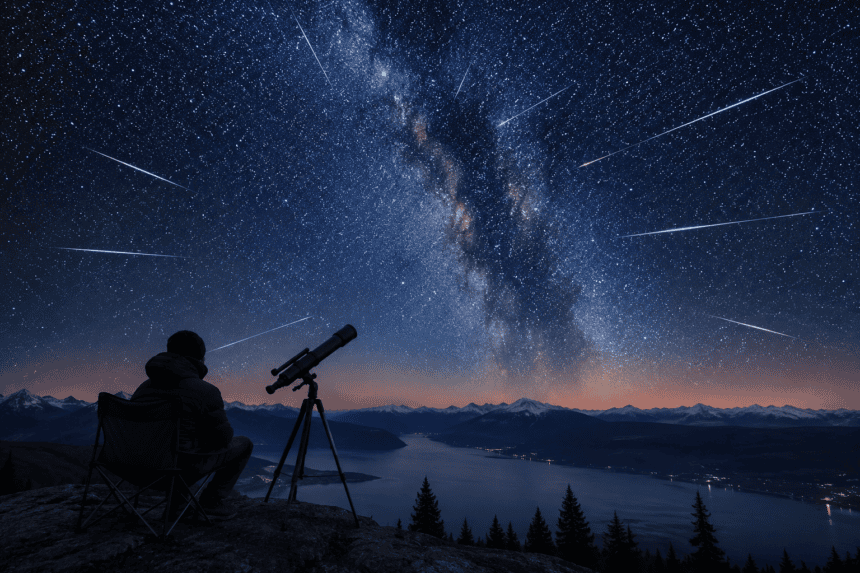
The Perseid meteor shower hits its peak tonight, offering a rare opportunity to see up to 100 shooting stars an hour. While the annual display is a staple of the summer sky, this year’s conditions are aligning to make it the most visible event for amateur astronomers in over a decade.
The secret to tonight’s visibility isn’t just the sheer number of meteors—it’s the moon. With the moon currently in a thin waxing crescent phase, it will set early in the evening, leaving the sky in near-total darkness. For those in rural areas away from city light pollution, the lack of lunar interference turns the night sky into a high-contrast canvas.
“It’s not often we get this kind of window,” said Dr. Elena Rossi, an astrophysicist tracking the debris field. “Usually, a bright moon washes out the fainter streaks. Tonight, even the smaller particles from the Swift-Tuttle comet will be visible to the naked eye.”
To catch the show, you don’t need a telescope or binoculars. In fact, they’ll only limit your field of view. The best strategy is to find a dark spot, lie flat on your back, and give your eyes at least 20 minutes to adjust to the dark.
The meteors appear to radiate from the constellation Perseus, located in the northeastern sky. While you can look in that direction, experts suggest scanning the entire overhead dome. The meteors—often leaving long, glowing trails—can appear anywhere in the sky.
This celestial event is the result of Earth passing through the debris trail left by the comet 109P/Swift-Tuttle. As these tiny fragments hit our atmosphere at 133,000 miles per hour, they vaporize, creating the flashes of light we see from the ground. It is a violent, high-speed collision, but from the perspective of an observer on Earth, it remains the year’s most accessible display of cosmic mechanics.
Peak activity is expected between midnight and dawn. If you’re planning to head out, bring a blanket and stay put; the longer you stay in the dark, the more your eyes will pick up the subtle, fleeting streaks that define the peak of the Perseids.
Whether it is the “best” day of the year depends on your tolerance for a late night, but for pure visual clarity and frequency, tonight is as good as the sky gets.