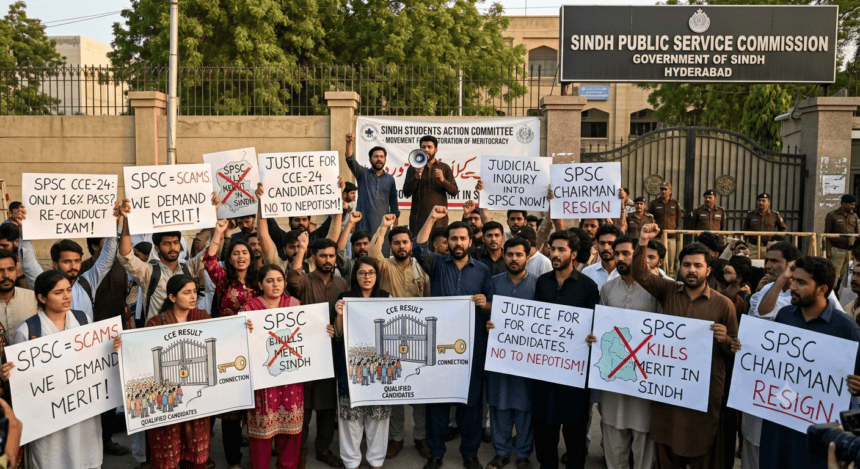
The results of a major civil service examination have triggered protests among jobseekers, with unsuccessful candidates raising concerns over the examination and selection process. The controversy has highlighted wider frustrations among young people competing for a limited number of government jobs.
For many candidates, passing a competitive civil service examination is seen as a major opportunity for stable employment and a long-term career in the public sector. As a result, any concerns about the transparency, fairness or accuracy of the results can quickly generate widespread criticism.
Why are candidates protesting?
The protesting candidates are reportedly seeking answers about the way the examination was conducted and how the final results were determined. Their concerns include questions about the evaluation process, merit, transparency and the overall credibility of the results.
Candidates who believe they performed well but were not selected may demand greater transparency in the marking and assessment process. They may also seek clarification about how candidates were shortlisted and whether the prescribed criteria were applied consistently.
Why is the issue important?
Civil service examinations are highly competitive because thousands of applicants often compete for a relatively small number of vacancies. Candidates spend months or even years preparing for these examinations, making the final result extremely important for their career prospects.
When candidates believe that the process was not transparent, the issue goes beyond individual disappointment. It can raise broader questions about public-sector recruitment and whether government institutions are providing equal opportunities to all applicants.
What are protesters demanding?
The protesters are seeking greater clarity over the results and examination procedure. Depending on the specific complaints, their demands may include an independent review, rechecking of answer sheets, access to relevant examination records, clarification of the merit criteria and investigation of any alleged irregularities.
They want the authorities to address their concerns and ensure that the recruitment process remains based on merit and transparent procedures.
What happens next?
The authorities are expected to examine the candidates’ complaints and determine whether there is sufficient basis for further review. If irregularities are established, the relevant authorities may need to take corrective measures. If the results are found to have been compiled according to the prescribed rules, officials will need to clearly explain the process to address concerns among candidates.
The controversy has once again drawn attention to the importance of transparent, credible and merit-based recruitment in the public sector. For thousands of young jobseekers, confidence in the examination system is almost as important as the results themselves.