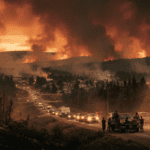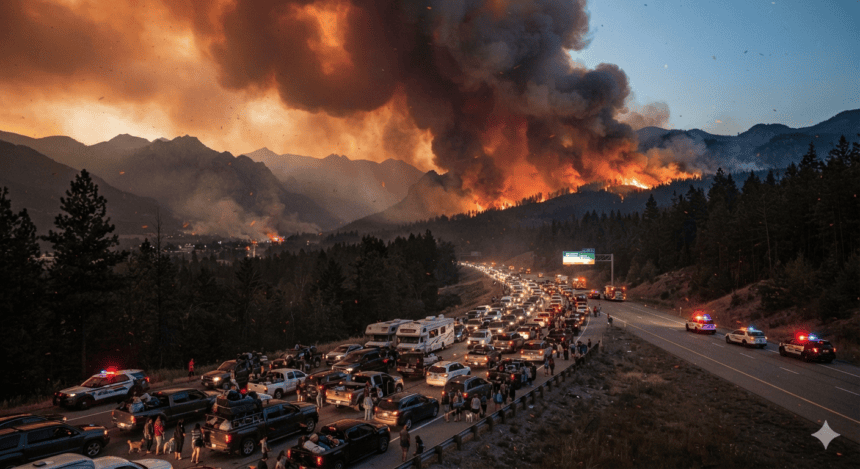
Eighteen thousand residents are under evacuation orders as the Bald Range wildfire tears through British Columbia’s interior, turning thousands of acres into ash and forcing entire communities to abandon their homes overnight.
The fire, which ignited late Tuesday, doubled in size by Wednesday morning, fueled by record-breaking temperatures and erratic winds. Emergency crews are currently struggling to gain a foothold as the blaze jumps containment lines, threatening critical infrastructure and major highways.
“We’re in a race against the weather,” said BC Wildfire Service spokesperson Sarah Jenkins during a briefing early Thursday. “The terrain is rugged, the heat is relentless, and we’re dealing with fire behavior we haven’t seen in this sector for years.”
The evacuation orders center on the regional district surrounding Bald Range, where thick, acrid smoke has turned the sky a deep, ominous orange. Families were given less than an hour to pack essentials, leading to gridlock on the few remaining open arteries heading west.
For many, this is a recurring nightmare. The province has faced increasingly intense fire seasons, but the speed of this particular event has caught even seasoned emergency managers off guard. Local hospitals have begun transferring patients to facilities in the lower mainland, while shelters in neighboring towns are already reporting capacity issues.
Provincial officials are now coordinating with the Canadian Armed Forces, seeking aerial support to dump retardant on the fire’s most aggressive flanks. Ground crews are focusing their limited resources on protecting residential clusters, but the shifting winds make every shift in strategy a gamble.
Beyond the immediate threat, the economic fallout is mounting. The fire has severed a key supply route, halting freight movement and disrupting tourism in a region already bracing for a lean summer.
As night falls, the glow from the ridgeline remains visible for miles. There is no timeline for when the 18,000 displaced residents might return; for now, they remain in temporary housing, waiting for the wind to die down.