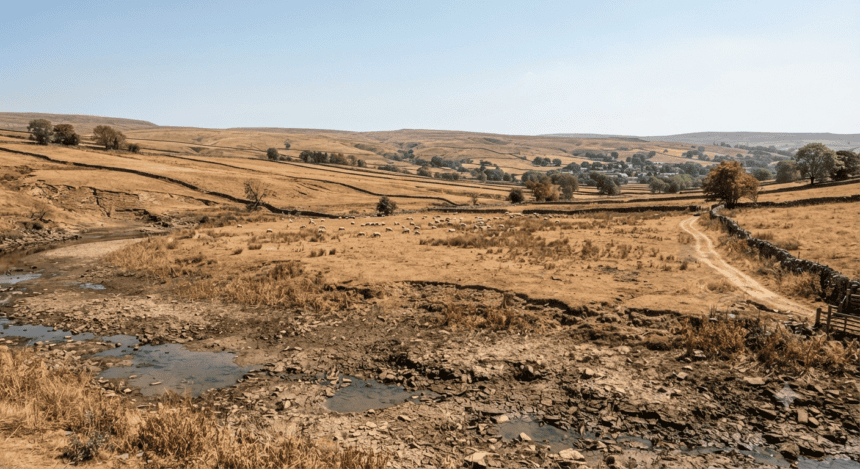
England’s once-verdant landscape has turned a stark, dusty brown as an unrelenting summer drought strips the countryside of its color. Satellite imagery and ground-level photographs show vast swathes of parkland, fields, and even residential lawns withered by weeks of record-breaking heat and minimal rainfall.
The visual shift is jarring. Places like the Royal Parks in London—usually lush green hubs—now resemble the scorched plains of Southern Europe. Grass has gone dormant to survive, leaving behind a brittle, straw-colored carpet that crunches underfoot.
The heat has moved beyond a mere aesthetic inconvenience. Water utility companies are scrambling to manage supply as reservoirs drop to their lowest levels in decades. For farmers, the drought is a direct hit to the bottom line. Crop yields for staples like potatoes, onions, and grains are expected to plummet, forcing a reliance on imports that could drive up food prices in an already inflation-heavy economy.
“We are seeing a complete reversal of the typical British summer,” said a climate analyst based in London. “The soil is so dry it has begun to crack, creating a feedback loop where the earth can no longer retain the small amount of moisture that does fall.”
The UK’s environmental agencies have issued persistent warnings, urging residents to cut back on non-essential water usage. Hosepipe bans are spreading across counties as authorities attempt to preserve water for critical infrastructure. While the government has stopped short of declaring a formal national drought emergency, the visual evidence across the Home Counties makes the reality difficult to ignore.
Historical weather patterns suggest England is ill-equipped for this level of sustained aridness. The current infrastructure, designed for a temperate, rain-heavy climate, is struggling to distribute water effectively as demand spikes during the heat.
As the sun continues to beat down on the parched earth, the brown landscape serves as a stark reminder of a changing climate. Unless a significant, sustained period of rainfall arrives soon, the scorched fields will remain a fixture of the English summer—and a harbinger of the agricultural challenges to come.