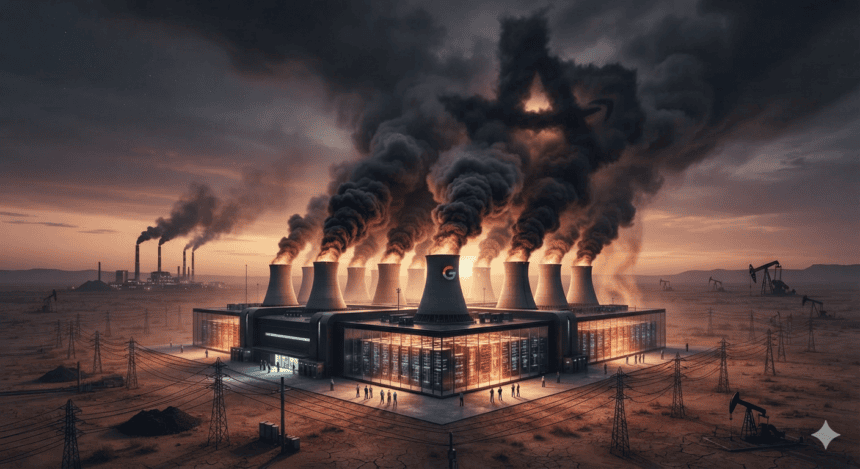
Amazon’s planned data center campus in West Texas is drawing sharp criticism from environmental watchdogs, with new projections suggesting the facility could become one of the largest climate polluters in the United States.
The project, located in the Permian Basin, relies on a massive fleet of on-site natural gas generators. Unlike typical data centers that draw power from the regional grid, this site is designed to operate independently, effectively functioning as a private power plant to ensure 24/7 uptime for Amazon Web Services (AWS).
Environmental analysts calculate that the facility’s emissions could eclipse those of coal-fired power plants once fully operational. The primary concern lies in the sheer volume of nitrogen oxides and greenhouse gases vented directly into the atmosphere, a move that critics argue contradicts Amazon’s public-facing “Climate Pledge.”
“Amazon is building a power plant that happens to host servers, not a data center that uses power,” said a policy analyst familiar with the site’s permit filings. “The scale of this infrastructure in a region already struggling with air quality is a massive step backward for corporate sustainability.”
Amazon maintains that the backup generation is a necessity for the reliability of cloud infrastructure. The company points to its ongoing investments in renewable energy, including wind and solar projects across Texas, as evidence of its long-term commitment to net-zero carbon emissions by 2040.
However, the disconnect between its massive renewable energy purchases and the localized, fossil-fuel-heavy footprint of this specific campus has created a public relations headache. While the company buys enough renewable energy to match its global consumption, the physical reality in the Permian Basin remains tied to natural gas.
For residents in the surrounding area, the issue is not just global climate impact but local air quality. The facility’s proposed air permits allow for significant emissions, raising questions about how state regulators balance the rapid growth of the tech sector against the health of local communities.
As AI demand surges, the energy requirements for data centers are skyrocketing, forcing tech giants to choose between grid stability and their own aggressive green mandates. Amazon now faces a choice: pivot to cleaner, albeit more expensive, on-site energy solutions or accept the reputational cost of being the architect of a new, massive carbon source.