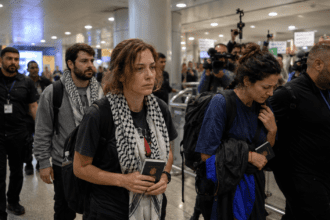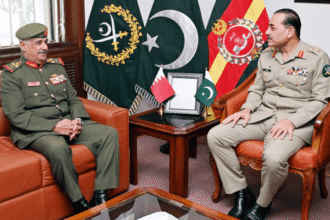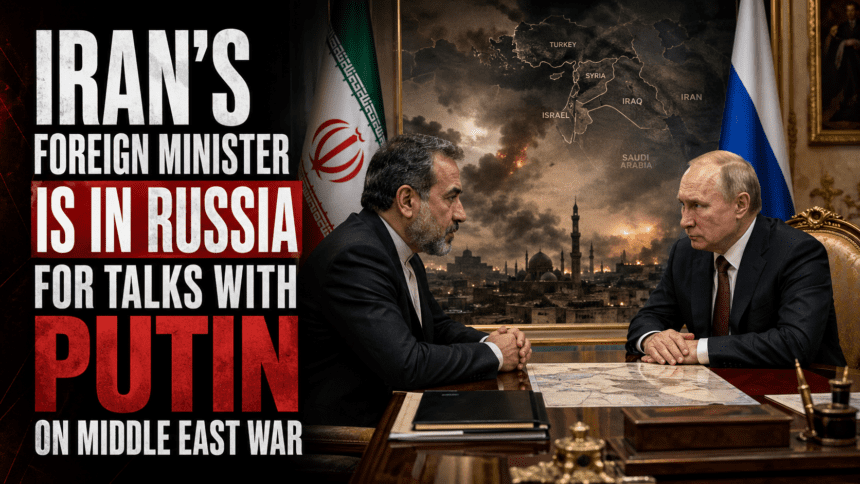
Iranian Foreign Minister Abbas Araghchi arrived in Russia on Monday for talks with President Vladimir Putin, opening another high-level diplomatic push as efforts to de-escalate the wider Middle East war remain stuck. Reporting from April 27 says Araghchi reached St. Petersburg after earlier stops in Pakistan and Oman, underscoring how urgently Tehran is trying to line up regional and international backing while direct progress with Washington has slowed.
The visit comes right after the collapse of the Pakistan track, where a planned follow-up meeting involving U.S. envoys Steve Witkoff and Jared Kushner was called off by President Donald Trump. That matters because Pakistan had briefly looked like the most active venue for renewed U.S.-Iran contacts. With that route suddenly frozen, Araghchi’s move to Russia looks less like routine diplomacy and more like a shift toward Moscow as Tehran searches for leverage.
Iran has framed the Moscow trip as part of “close consultations” with Russia on regional and international developments. Russian and Iranian ties were already deep, but this meeting gives them extra weight: Tehran wants political support and coordination at a moment when the conflict’s military and economic fallout is still spreading, especially around the Strait of Hormuz.
There is also a practical reason for the timing. Araghchi has been moving through a fast, compressed diplomatic circuit — Pakistan, then Oman, now Russia — while talks over sanctions, Iran’s nuclear program, and shipping access through Hormuz remain unresolved. NPR described it as a “flurry of diplomacy,” but also noted the basic problem: there is still no sign of a fresh face-to-face breakthrough between Tehran and Washington.
For Moscow, the meeting is a chance to show it still matters in one of the most dangerous crises now unfolding. For Tehran, it is a reminder to Washington that Iran has other powerful interlocutors when U.S.-led diplomacy stalls. And for the broader region, the symbolism is hard to miss: while one negotiating channel has faltered, Iran is visibly trying to build pressure and options elsewhere. That does not guarantee movement, not even close, but it does suggest the diplomatic contest is widening rather than ending. This last point is an inference based on the pattern of Araghchi’s travel and the collapse of the Pakistan talks.