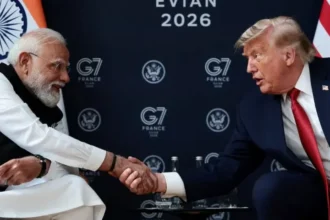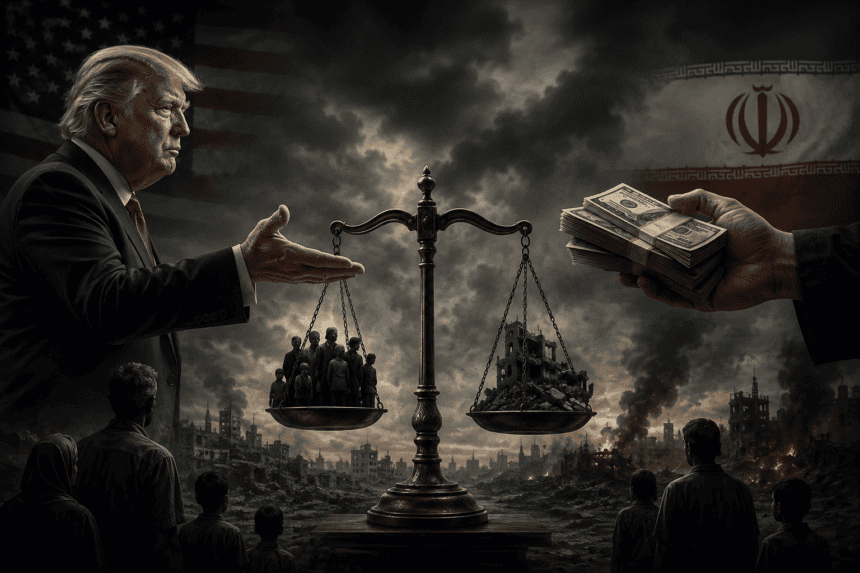
Donald Trump has issued a blunt ultimatum to Tehran, calling for Iran to pay massive financial compensation to the families of individuals killed in regional conflicts linked to Iranian-backed groups. The former president, addressing supporters at a rally, framed the demand as a necessary step for “accountability” following years of what he described as destabilizing proxy warfare.
The proposal marks a sharp escalation in Trump’s rhetoric regarding Middle Eastern policy. He didn’t provide a specific dollar figure or a legal framework for how such payments would be enforced, but the message was clear: he intends to make the cost of regional influence prohibitively expensive for the Iranian leadership.
“They’ve caused so much pain,” Trump told the crowd. “They need to pay for what they’ve done.”
Critics of the former president’s approach argue the demand is largely performative. International law provides few, if any, mechanisms to force a sovereign state to provide restitution to foreign citizens for military actions conducted by proxy militias. Legal experts point out that even during his first term, attempts to tie sanctions to specific humanitarian grievances faced significant hurdles in international courts.
The Iranian government has dismissed the remarks as campaign-trail posturing. Tehran has consistently maintained that its regional activities are defensive in nature and aimed at protecting its strategic interests against Western encroachment. Iranian state media labeled the comments a “distraction” from domestic political pressures within the United States.
For the families of those lost in these conflicts, the demand carries a heavy emotional weight, though it offers little in the way of immediate relief. The divide between the political rhetoric and the reality of international diplomacy remains vast.
Trump’s pivot toward this demand suggests that, should he return to the White House, he plans to move beyond traditional sanctions, instead pivoting to a strategy of financial attrition. Whether this leads to a formal policy shift or remains a talking point for his base, the proposal signals a hardening stance that leaves even less room for future diplomatic engagement.