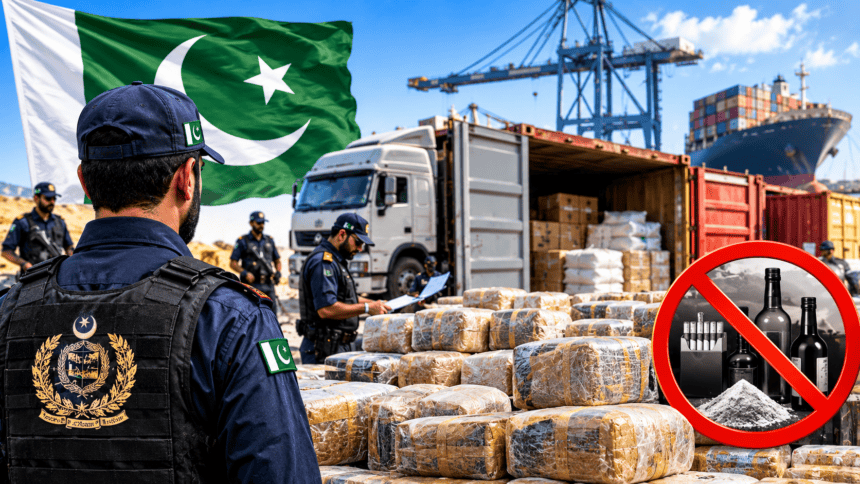
Pakistan Customs has launched a series of high-stakes operations across key entry points, seizing millions in contraband and shutting down long-standing supply lines. The move comes as the government faces mounting pressure to plug revenue leaks and stabilize a volatile domestic market.
The crackdown, concentrated along the Torkham border and the Balochistan transit corridors, targets the influx of non-customs-paid vehicles, foreign cigarettes, and luxury textiles. Customs officials confirmed the seizure of goods valued at over PKR 400 million in the last 72 hours alone. For local traders, however, the heavy-handed approach has sparked fears of supply chain disruptions that could drive prices higher in the short term.
“We are not just targeting the cargo; we are dismantling the logistics network that sustains these routes,” a senior Customs official told reporters on the condition of anonymity. He pointed to the recent deployment of mobile surveillance units—a tactical shift from static checkpoints that smugglers had learned to bypass for years.
The government’s motivation is clear: fiscal survival. With the FBR (Federal Bureau of Revenue) struggling to meet ambitious collection targets, authorities view the informal economy as a direct threat to national solvency. Every truckload of smuggled goods represents a loss of duties that the finance ministry insists is essential to meeting IMF program benchmarks.
Critics argue that the strategy lacks nuance. By focusing on border seizures while the wholesale markets in urban centers remain flooded with illicit inventory, the operation risks punishing small-scale transporters while the primary financiers stay in the shadows. The Customs department maintains that the current “choke-point” strategy is the only way to disrupt these networks before they reach the cities.
Whether this momentum lasts remains the industry’s biggest question. Past crackdowns have historically faltered as political pressure mounted or logistical costs became unsustainable. For now, the Torkham and Chaman crossings remain under strict scrutiny, with Customs officials promising that the current surge in activity is only the first phase of a broader, sustained campaign against the shadow economy.