The dengue situation in Islamabad remains under control, according to health authorities, who have intensified surveillance and preventive measures across the capital to prevent the spread of the mosquito-borne disease.
According to the Directorate of Health Services, only two confirmed dengue cases have been reported in Islamabad so far. Health officials said both patients were originally from areas outside the capital, indicating that there is currently no major local outbreak in the city.
Health authorities have nevertheless increased preventive activities because dengue cases can rise during periods when weather conditions become favorable for mosquito breeding. Teams are conducting door-to-door surveillance in different areas and checking residential premises for possible mosquito breeding sites.
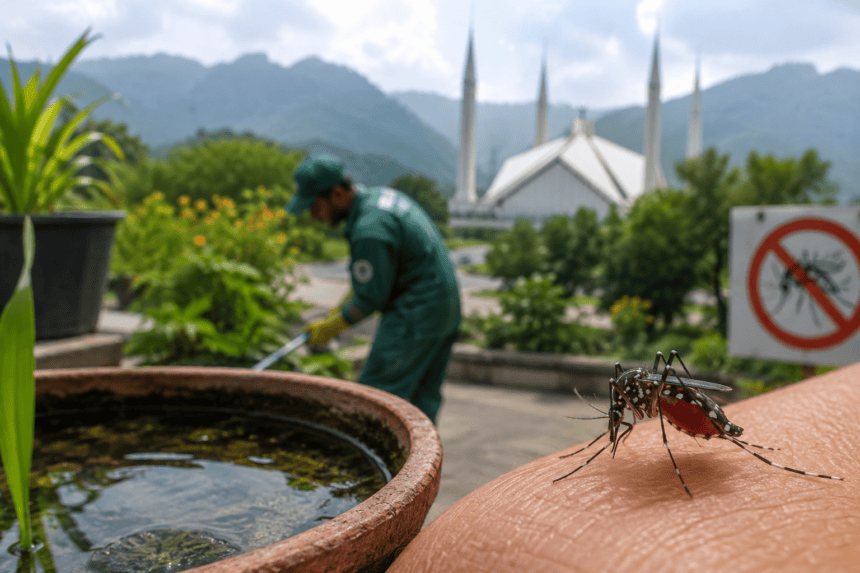
Around 1,000 staff members are participating in the dengue-control campaign. Their responsibilities include inspecting homes and surrounding areas, identifying stagnant water and mosquito larvae, educating residents and taking measures to eliminate breeding sites.
Officials have also urged citizens to play an active role in preventing dengue. Residents are advised to regularly check water containers, flower pots, rooftops, drains and other places where stagnant water can collect. Removing standing water can help reduce breeding opportunities for Aedes mosquitoes, which transmit dengue.
Health teams are also carrying out awareness activities to inform residents about dengue prevention and the importance of seeking medical attention if symptoms develop. Common symptoms can include high fever, severe headache, body and joint pain, nausea and skin rash.
The health authorities have clarified that their current focus is on prevention, surveillance and public awareness. Officials also dismissed reports suggesting that FIRs were being registered against homeowners whenever dengue larvae were found on their premises, saying the campaign is primarily aimed at cooperation and disease prevention.
Authorities have appealed to residents to cooperate with surveillance teams when they visit homes and to immediately remove any stagnant water found around their properties.
Health officials continue to monitor the situation closely and are maintaining surveillance to detect any increase in dengue cases at an early stage. They have emphasized that community participation is essential to keeping dengue under control in Islamabad.