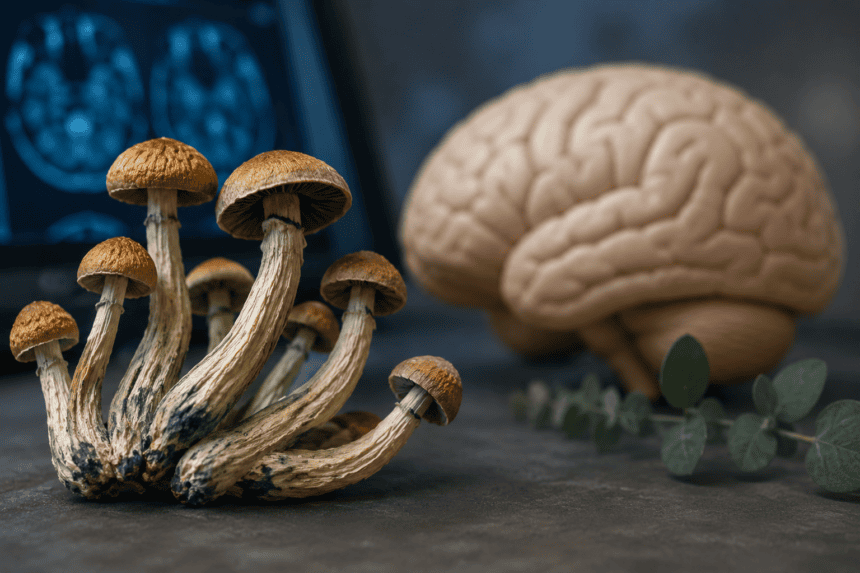
A single dose of psilocybin, combined with structured psychological support, has shown promising results in people living with treatment-resistant depression, according to a new clinical trial conducted within the UK’s National Health Service (NHS).
The randomized, double-blind, placebo-controlled trial involved 60 adults with major depressive disorder whose symptoms had not improved adequately after previous treatments. Participants received either a single 25-milligram dose of psilocybin or a placebo, along with psychological preparation, support during the dosing session and follow-up care.
Researchers found that participants who received psilocybin experienced a substantial reduction in depressive symptoms compared with those who received the placebo. The improvement remained evident during the six-week follow-up period, providing preliminary evidence that the effects of a single treatment may persist beyond the immediate psychedelic experience.
The study is particularly significant because it was conducted within a public healthcare setting. Researchers wanted to determine whether psilocybin-assisted therapy could be delivered safely and practically through the NHS rather than only in highly specialized research environments.
Participants were carefully prepared before receiving the treatment and were monitored during the dosing session. Psychological support was also provided afterward to help participants process their experiences. This structured approach is an important part of psychedelic-assisted therapy and differs substantially from taking psilocybin outside a medical or research setting.
The researchers reported that the treatment was generally well tolerated by participants. However, psilocybin can produce temporary psychological and physical effects, and its use in the trial occurred under professional supervision. The findings therefore should not be interpreted as evidence that unsupervised use of psychedelic substances is safe or effective.
Why Treatment-Resistant Depression Matters
Treatment-resistant depression refers to depression that does not respond adequately to previous treatments. For people affected by this condition, persistent symptoms can have a major impact on daily life, relationships, work and overall quality of life.
The possibility of achieving meaningful improvement after a single supervised treatment has therefore attracted considerable interest among researchers. Unlike many conventional antidepressants, which are generally taken regularly over extended periods, psychedelic-assisted treatments are being investigated for whether they can produce significant changes after one or a limited number of sessions.
Researchers Urge Caution
Despite the encouraging findings, researchers stressed that the trial was primarily designed to assess feasibility and preliminary clinical outcomes. The relatively small sample size and six-week follow-up mean that larger studies are needed to determine how effective the treatment is across broader populations and how long its benefits may last.
Further research will also need to examine the treatment’s long-term safety, the best psychological-support model and whether the approach can be delivered effectively on a larger scale within public healthcare systems.
The findings do not mean psilocybin is already an established routine treatment for treatment-resistant depression. Instead, they add to growing evidence that psychedelic-assisted therapy could become an important area of future mental-health research.
For now, experts emphasize that psilocybin treatment should only be considered within appropriate clinical or research settings and should not replace prescribed depression treatment without medical supervision.