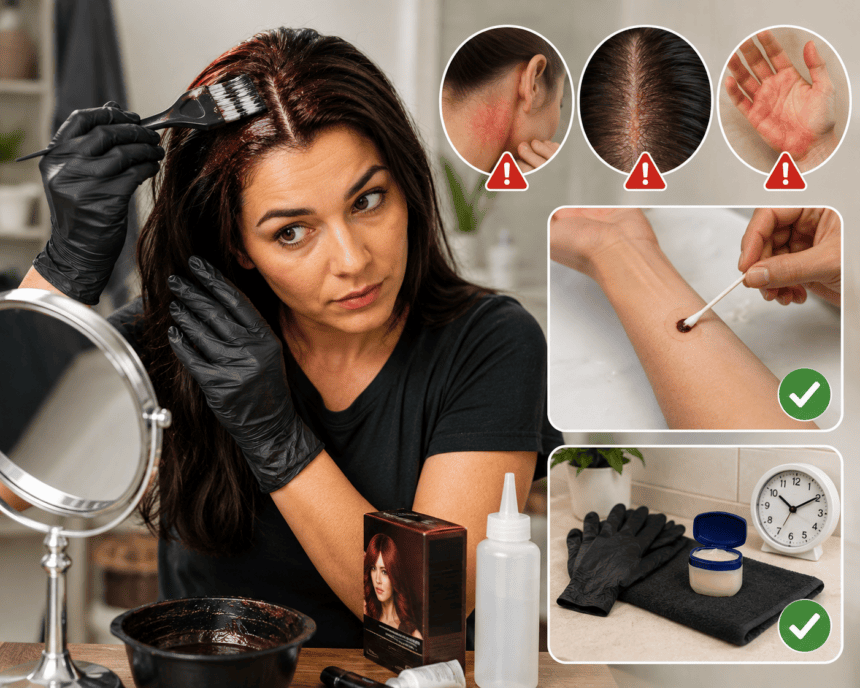
Changing your hair color at home can be convenient and less expensive than visiting a salon.
Millions of people use permanent, semi-permanent and temporary hair dyes without serious problems. However, hair dye products contain chemicals that can sometimes irritate the skin or trigger an allergic reaction.
Using them safely requires more than simply following the color instructions.


What Is Inside Hair Dye?
Different hair dyes contain different ingredients.
Permanent dyes often use chemicals that help color molecules penetrate the hair shaft and create longer-lasting color.
One ingredient associated with allergic reactions is paraphenylenediamine (PPD), which is commonly used in many permanent and dark hair dyes.
Not everyone reacts to these ingredients, but sensitivity can develop over time.
Why Is a Patch Test Important?
A patch test is designed to help identify possible sensitivity before applying the product extensively.
Even if you’ve used the same type of dye before without a problem, allergies can develop later.
That’s why following the manufacturer’s patch-test instructions before each use is important.
A patch test cannot guarantee that a reaction will never occur, but it can reduce the risk of unexpected exposure.
What Can a Reaction Look Like?
A mild reaction may cause:
- Itching
- Redness
- Burning
- Dryness
- Swelling
- Rash
Some reactions may appear hours after application rather than immediately.
Severe allergic reactions can cause swelling of the face or throat and difficulty breathing. These symptoms require urgent medical attention.
Protect Your Skin
Hair dye should be kept away from the eyes and unnecessary contact with the face and neck.
Wearing gloves can reduce exposure to the hands.
It’s also important to follow the product’s instructions regarding application time.
Leaving dye on longer than recommended does not necessarily produce a better result and may increase irritation.
What About Damaged Hair?
Hair dye can change the structure of the hair, especially permanent bleaching and coloring products.
Repeated chemical treatments can contribute to:
- Dryness
- Breakage
- Split ends
- Rough texture
This does not necessarily mean hair dye is unsafe, but frequent chemical processing can make hair more vulnerable to damage.
Should You Dye Your Hair If Your Scalp Is Irritated?
It is generally better to avoid applying hair dye to an already irritated, scratched or damaged scalp.
Existing irritation may increase discomfort and exposure to chemicals.
People with a history of severe reactions to hair products should speak with a healthcare professional before using another product.
Does “Natural” Mean Safer?
Not automatically.
Products marketed as natural can still contain substances capable of causing irritation or allergy.
The important issue is the ingredients and how your body responds to them, not simply whether the packaging uses the word “natural.”
Safe Home Hair-Dye Habits
Before using hair dye:
- Read the complete instructions.
- Perform the recommended allergy test.
- Wear suitable gloves.
- Avoid contact with the eyes.
- Do not exceed the recommended processing time.
- Keep the product away from children.
- Stop immediately if intense burning or a strong reaction develops.
The Bottom Line
Hair dye can be safely used by many people when the product is used correctly.
However, allergic reactions and skin irritation are possible.
The safest approach is to follow the manufacturer’s instructions carefully, perform the recommended allergy test and avoid using products on an irritated scalp.
A few minutes of preparation can make a big difference in preventing an unpleasant reaction.