Pimples are one of the most common skin problems, particularly during adolescence and young adulthood.
They can appear as tiny blackheads, whiteheads, red bumps or painful deeper spots.
Many people assume acne is simply caused by dirty skin or poor hygiene, but the real story is much more complicated.
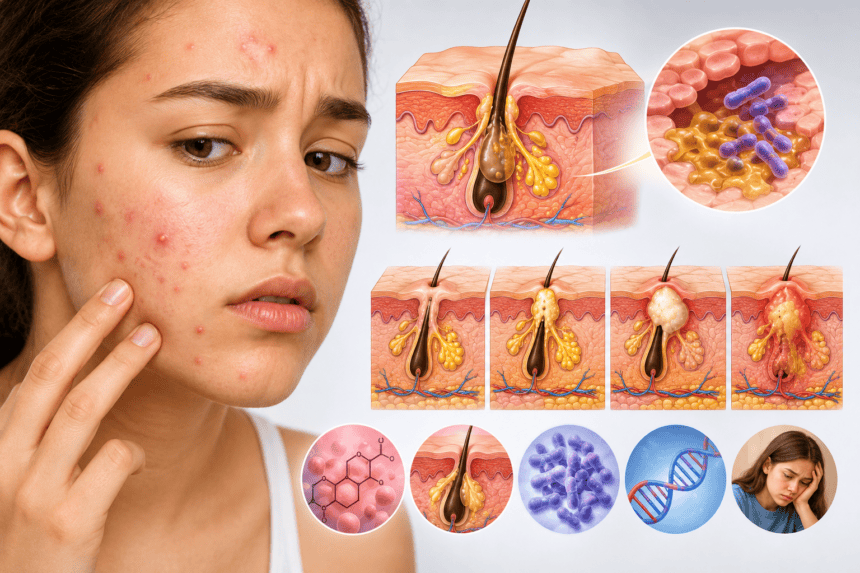
Acne develops through a combination of oil production, clogged hair follicles, skin-cell changes, microorganisms and inflammation
Your skin contains thousands of tiny structures called hair follicles.
Each follicle is connected to a sebaceous gland, which produces sebum—the natural oil that helps protect the skin.
Normally, sebum travels through the follicle and reaches the skin surface.
Problems begin when the follicle becomes blocked.
Excess Oil Can Contribute to Clogged Pores
During puberty and periods of hormonal change, sebaceous glands can become more active.
More sebum is produced.
When excess oil mixes with dead skin cells, the opening of a hair follicle can become blocked.
This creates an environment where a pimple can develop.
How Does a Blackhead Form?
When a clogged pore remains open to the air, the material inside can undergo chemical changes that make it appear dark.
This creates a blackhead.
The black color is not simply dirt trapped inside the pore.
It is largely related to oxidation and changes in the material exposed to air.
What About Whiteheads?
A whitehead forms when the follicle opening is blocked and remains closed.
The accumulated oil and dead skin cells create a small raised bump.
Unlike blackheads, the contents are not exposed to air in the same way.
Why Do Pimples Become Red?
Inflammation is a major part of acne.
When a blocked follicle becomes inflamed, immune responses are activated.
The area may become red, swollen and tender.
This produces the familiar appearance of an inflammatory pimple.
What Role Do Bacteria Play?
The skin naturally contains microorganisms, including bacteria associated with acne.
One important species is Cutibacterium acnes.
These bacteria are not simply “dirt” and cannot be completely eliminated from normal skin.
When a follicle becomes blocked and conditions change, however, interactions involving these microorganisms can contribute to inflammation.
Why Is Acne Common During Puberty?
Hormonal changes during puberty stimulate sebaceous glands.
Androgens increase sebum production and can affect the behavior of hair follicles.
This helps explain why acne often begins or becomes more noticeable during adolescence.
But acne can continue into adulthood and can affect people of many ages.
Does Chocolate Cause Pimples?
The relationship between diet and acne is more complicated than simply blaming one food.
Research suggests that certain dietary patterns may influence acne in some people, but acne is not caused by a single food in every individual.
Hormones, genetics, skin biology and environmental factors can all contribute.
Does Washing Your Face More Prevent Acne?
Not necessarily.
Excessive washing or aggressive scrubbing can irritate the skin and damage its protective barrier.
Acne begins inside the hair follicle, so simply washing the surface more aggressively cannot solve every underlying cause.
A gentle cleansing routine is generally preferable.
Should You Pop a Pimple?
Squeezing or repeatedly picking pimples can push inflammation deeper into the skin and increase the risk of scarring or dark marks.
Even though popping a pimple can be tempting, leaving it alone is often better for the skin.
When Should Acne Be Treated?
Mild acne may improve with appropriate skincare and over-the-counter treatments.
Moderate or severe acne, painful cysts, widespread breakouts or acne that causes scarring may require professional treatment.
Dermatologists can recommend treatments based on the type and severity of acne.
The Bottom Line
Acne is not simply a cleanliness problem.
It develops through a combination of oil production, clogged follicles, hormonal influences, microorganisms and inflammation.
Understanding the biology behind pimples can make it easier to choose sensible skincare and avoid myths that can actually make acne worse.
Your skin is a complex living organ—and every pimple has a biological story happening beneath the surface.