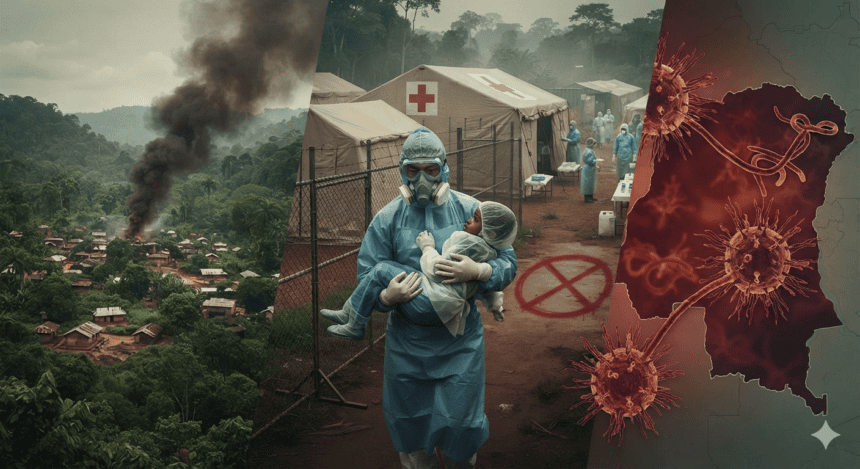
The 2018–2020 Ebola outbreak in the Democratic Republic of the Congo (DRC) didn’t just kill 2,280 people; it exposed a broken system where medicine collided with war. While the 2014–2016 West African epidemic remains the deadliest, the North Kivu and Ituri surge stands as the second-most lethal in history—and the most complex.
The virus didn’t move alone. It traveled through a landscape fractured by decades of armed conflict. More than 100 rebel groups operated in the region, turning health clinics into targets and community trust into a casualty. When the World Health Organization (WHO) and local responders arrived, they weren’t just fighting a pathogen; they were operating in a “no-go” zone where the state’s presence was barely visible.
“People didn’t trust the men in hazmat suits,” said a former field coordinator for Doctors Without Borders. “To them, the Ebola teams looked like the same government forces that had been terrorizing their villages for years.”
This suspicion crippled containment efforts. In the early months, more than 40% of deaths occurred in households rather than treatment centers. Families hid their sick, burying them in secret to bypass the mandatory, safe-burial protocols. Every secret funeral became a new transmission chain.
The geography of the region added another layer of danger. North Kivu is a transit hub. The virus jumped between bustling marketplaces and remote forest camps, moving faster than the contact-tracing teams could track. By the time the WHO declared it a Public Health Emergency of International Concern in 2019, the virus had already crossed into neighboring Uganda, sparking fears of a regional wildfire.
Technological advancements—specifically the rVSV-ZEBOV vaccine—eventually turned the tide. Unlike the West African crisis, responders had a weapon this time. More than 300,000 people were vaccinated through a “ring vaccination” strategy, targeting the contacts of those infected. It was a logistical marvel, executed by teams that often had to travel in armored vehicles to avoid insurgent ambushes.
The outbreak finally ended in June 2020, overshadowed almost immediately by the arrival of COVID-19. However, the legacy of the DRC crisis remains a stark warning for global health security. It proved that a vaccine is useless if the population doesn’t trust the hand that delivers it.
The battle was won, but the conditions that allowed the virus to thrive—poverty, political instability, and the total collapse of local infrastructure—remain unchanged. The next outbreak isn’t a matter of if, but where.