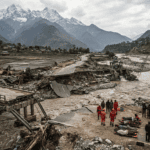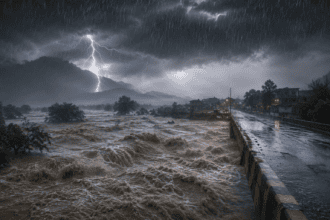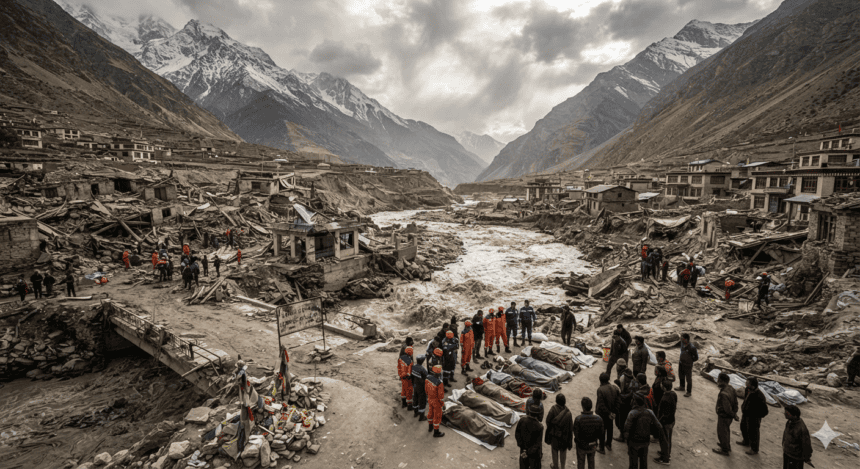
A massive flash flood surged through the Nepal-Tibet border region on Friday, leaving at least 17 people dead and several others missing. The torrent, triggered by heavy monsoon rains and a glacial lake outburst, tore through remote settlements, destroying homes and cutting off vital supply routes.
Rescuers reached the affected areas in the Sindhupalchok district early Saturday morning. They found a landscape scarred by mud and debris. The local police chief confirmed that while 17 bodies have been recovered, the death toll will likely climb as search operations push into more isolated valleys where communication remains severed.
The devastation follows days of unrelenting downpours that weakened the region’s already fragile mountain slopes. Experts have long warned that rising temperatures are destabilizing glacial lakes in the Himalayas, turning once-stable basins into ticking time bombs. This disaster serves as a grim validation of those warnings.
“The water came down with almost no warning,” said Tenzing Sherpa, a local resident who escaped the rising tide by fleeing to higher ground. “Within minutes, the road was gone and the village below was just mud.”
Infrastructure damage is extensive. The Araniko Highway, the primary trade artery between Nepal and China, remains blocked at multiple points, halting the flow of goods and humanitarian aid. Heavy machinery is currently struggling to clear the debris, but frequent landslides and rain continue to hamper progress.
Government officials in Kathmandu have deployed military helicopters to evacuate the injured, though low-hanging clouds and erratic weather patterns have made aerial access a gamble. For those stranded, the immediate priority is finding clean water and shelter before the next wave of storms hits.
As the search continues, the focus shifts to the thousands of villagers living in the shadow of these unpredictable mountain peaks. For them, the monsoon season has become a period of constant, life-or-death uncertainty.