At least eight people are dead and several remain missing after heavy, relentless monsoon rains triggered flash floods across Nepal over the last 48 hours. The deluge has crippled critical infrastructure, washing away sections of major highways and forcing the emergency shutdown of several hydropower projects.
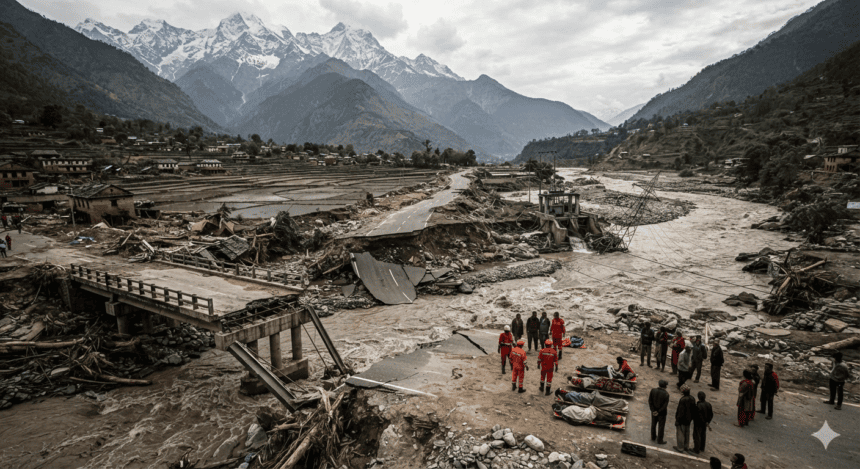
The worst-hit areas lie in the central and western districts, where riverbanks overflowed with little warning. In the Tanahun district, a sudden surge of water swept through residential settlements, leaving families scrambling for higher ground as their homes collapsed into the mud.
“The water rose so fast we didn’t have time to grab our documents, let alone our belongings,” said a local resident from a village near the Seti River. “We watched the road disappear before we could even reach the main highway.”
That highway—the Prithvi Highway, which serves as the primary lifeline between Kathmandu and the rest of the country—is now severed in multiple locations. Landslides have dumped thousands of tons of rock and debris across the tarmac, leaving cargo trucks and passenger buses stranded. Supply chains are already feeling the strain; food and fuel prices in the capital have begun to tick upward as transporters wait for the debris to be cleared.
The energy sector faces a significant hit as well. Officials at the Nepal Electricity Authority confirmed that at least three hydropower plants have been forced offline due to high sediment levels and damage to intake structures. With the grid already operating at tight margins, the loss of this generation capacity risks rolling blackouts in the coming days.
Search and rescue operations are currently hampered by continued rain and low-hanging clouds that have grounded police helicopters. Local authorities are relying on ground crews, but the rugged, unstable terrain makes each step a gamble for emergency responders.
While monsoon rains are a seasonal reality in the Himalayas, the intensity of this week’s downpours has overwhelmed existing flood-defense systems. Meteorologists warned that the soil remains saturated, meaning even moderate rain tonight could trigger further slides.
For now, the focus remains on recovery. With road access cut and communication lines flickering in remote valleys, the full death toll is likely to rise as rescue teams finally reach the most isolated pockets of the country.