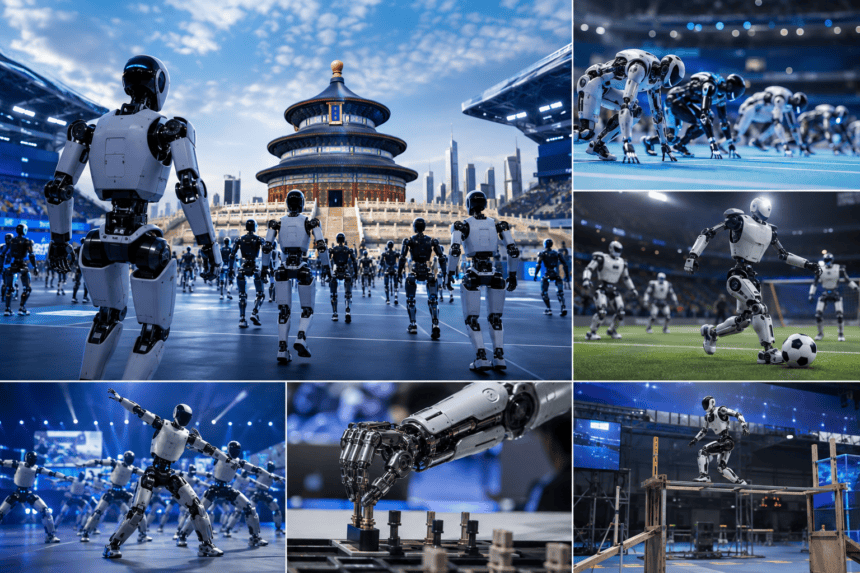
Beijing is once again the epicenter of global robotics as the Humanoid Robot Games open their doors, hosting over 2,000 entries from across the globe. This year’s competition signals a shift from purely academic exhibition to a grueling test of commercial viability and real-world utility.
The sheer scale of the event is hard to ignore. Organizers have confirmed that the field has ballooned compared to previous iterations, with a mix of established tech giants and scrappy, well-funded startups vying for dominance. The goal isn’t just to make machines walk or talk; it’s about proving these bots can handle the messy, unpredictable tasks of a factory floor or a hospital ward.
“We aren’t looking for parlor tricks,” said one lead judge during the opening ceremony. “We want to see if these machines can actually stay upright when you shove them, or if they can pick up a delicate object without crushing it.”
The competition features several distinct categories, ranging from high-speed navigation in obstacle-laden environments to complex object manipulation. Each event is designed to push the limits of current sensory hardware and AI integration. The stakes are high: for the startups involved, a strong showing here is often the difference between securing the next round of venture capital or fading into obscurity.
Technical challenges remain, however. Battery life continues to be the industry’s Achilles’ heel, with many of the top-performing humanoids struggling to maintain peak efficiency for more than a few hours. Cooling systems and thermal management also present recurring hurdles for engineers attempting to pack high-performance processors into compact, bipedal frames.
Despite these limitations, the rapid pace of development is undeniable. Compared to the prototypes showcased just two years ago, this year’s crop of robots shows significant improvements in balance and fluid motion. The integration of large-language models has also allowed for more intuitive human-robot interaction, moving the technology closer to the commercial mainstream.
As the games progress through the week, the industry will be watching closely. Whether these machines can graduate from the controlled environment of a Beijing arena to the unpredictable reality of human workspaces remains the ultimate test. For now, the focus is on the scoreboard—and which team can keep their robot standing the longest.