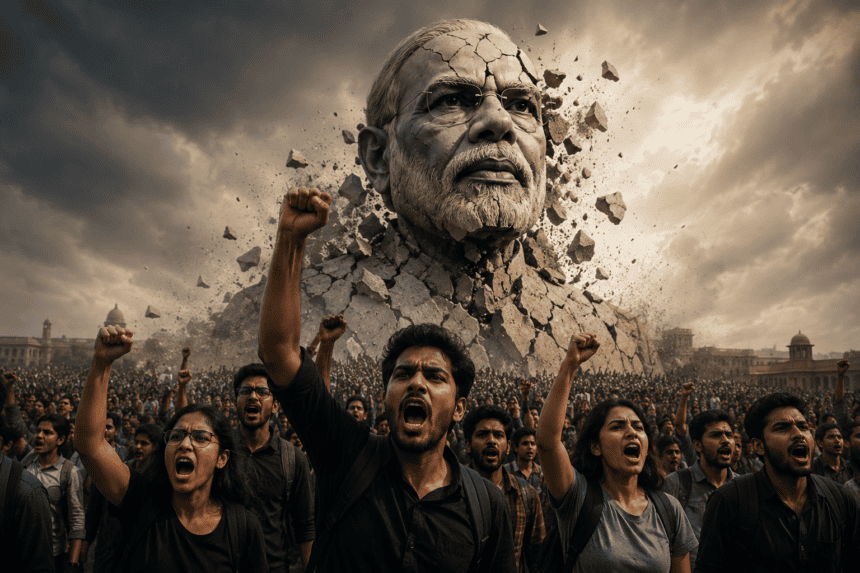
Prime Minister Narendra Modi’s political dominance, once seemingly impenetrable, is facing a sharp reality check. Across India, the demographic that fueled his ascent—the youth—is turning against the government, driven by a volatile mix of chronic joblessness and systemic exam failures.
The cracks in the BJP’s narrative of steady progress are widening. From the streets of Delhi to the university hubs of Bihar, tens of thousands of students have mobilized. They aren’t just protesting local policies; they are challenging the core promise of the Modi era: that a strong, centralized government would deliver a modern, meritocratic India.
Data confirms the friction. India’s unemployment rate among graduates remains stubbornly high, hovering near 30% in some regions. When the National Testing Agency (NTA) bungled the NEET-UG medical entrance exam earlier this year—leading to leaked papers and allegations of widespread corruption—the outrage wasn’t just about a test. It was a boiling point for a generation that feels the system is rigged against them.
“We studied for years, sacrificed everything, and now we’re told the game was fixed before we even sat down,” said a 21-year-old medical aspirant in Rajasthan. He didn’t want his name used, fearing retaliation from local authorities. His frustration mirrors a broader sentiment: a sense that the ‘Viksit Bharat’ (Developed India) pitch has become a hollow slogan for those struggling to find entry-level work.
The political fallout is already visible. In the recent general elections, the BJP lost its outright majority, forced to rely on coalition partners to keep the government afloat. Analysts argue that the youth vote, previously a reliable bedrock for Modi’s brand of nationalist populism, is no longer guaranteed. The opposition has seized on this, framing the exam scandals as a failure of governance rather than a mere administrative glitch.
Modi’s response has been defensive. His government replaced the NTA leadership and pushed through stricter anti-cheating legislation, but these moves feel reactive to many. For a leader who built his reputation on decisive, top-down control, being forced to pivot by student protesters is a rare sign of vulnerability.
The real danger for the ruling party isn’t just the protests themselves. It’s the erosion of the aura. For a decade, the BJP projected an image of competence and inevitability. Now, with the youth demanding accountability for broken promises, the government is finding that it can no longer rely on charisma alone to silence the streets.
The question now is whether the administration can provide tangible economic relief before the next cycle of state elections. If they can’t, the image of an invincible Modi may soon be relegated to the history books, replaced by the messy, unpredictable reality of a disillusioned electorate.