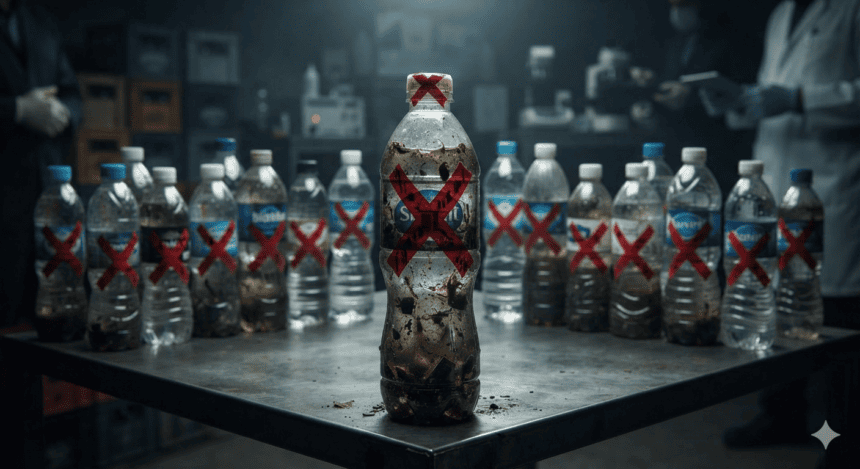
The Pakistan Council of Research in Water Resources (PCRWR) has officially declared 29 bottled water brands unsafe for human consumption. Following an extensive testing phase, the watchdog confirmed these products contain high levels of chemical and microbiological contaminants, posing a direct threat to public health.
The report, covering samples collected from major cities across the country, reveals that the water is tainted with dangerous levels of arsenic, sodium, and potassium. In several instances, the samples showed bacterial contamination, suggesting that the filtration and sterilization processes at these manufacturing plants are either non-existent or fundamentally broken.
For the average consumer, this is a significant blow to food safety. Many families rely on these bottled brands specifically to avoid waterborne diseases like typhoid, cholera, and dysentery, which are already endemic in many parts of Pakistan. Purchasing a “sealed” bottle has long been viewed as the safest option; now, that trust is shattered.
The list of banned brands includes several names widely available in local grocery stores and roadside kiosks. PCRWR officials confirmed that these companies failed to meet national quality standards repeatedly. Despite prior warnings and requests for process improvements, the manufacturers continued to supply tainted products to the market.
“We are tracking these companies closely,” an official familiar with the investigation said, speaking on condition of anonymity. “The goal isn’t just to publish a list — it’s to force these plants to shut down operations until they can prove they aren’t poisoning their customers.”
This isn’t the first time the water quality watchdog has sounded the alarm, but the scale of the current findings suggests a systemic failure in regulatory enforcement. While the PCRWR has the authority to test and report, the actual seizure of stock and the shuttering of facilities often falls to provincial food authorities, who are frequently criticized for their sluggish response times.
As the list circulates, health experts are urging citizens to check their supplies and rely on boiled or filtered water until the local market is cleared of the contaminated stock. For now, the brands in question remain a health hazard, and the gap between regulatory reporting and on-the-ground enforcement leaves millions of consumers at risk.