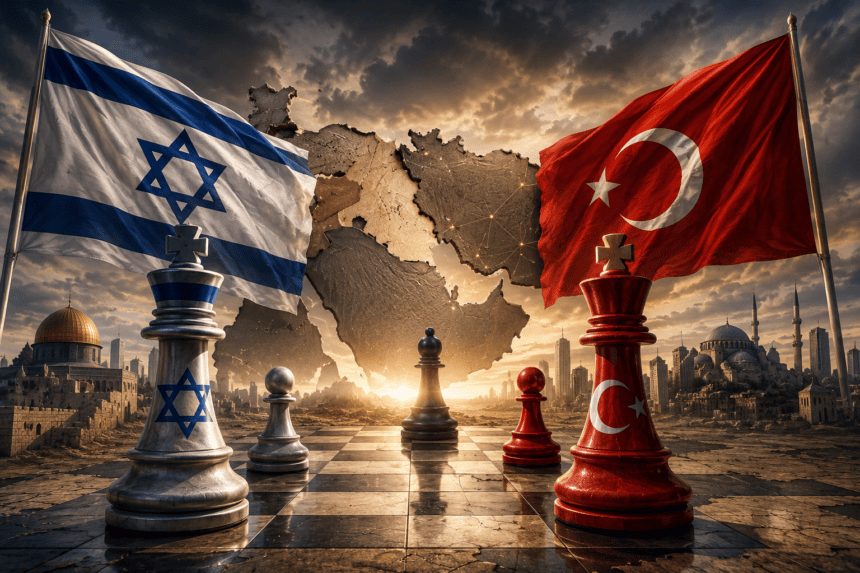
The long-standing hostility between Israel and Turkey is softening, driven by cold, hard necessity rather than newfound diplomatic warmth. After years of trading vitriol, both capitals are quietly prioritizing economic survival and regional security over the ideological friction that once defined their relationship.
President Recep Tayyip Erdoğan, long the fiercest critic of Israeli policy in Gaza and the West Bank, has shifted his rhetoric from confrontation to pragmatism. While the public discourse remains sharp, the quiet reality involves a steady flow of trade and intelligence cooperation that neither side is eager to broadcast.
The primary driver is the Mediterranean. Turkey finds itself increasingly sidelined by the EastMed Gas Forum—a coalition including Israel, Greece, Cyprus, and Egypt—that aims to export gas to Europe. Ankara’s aggressive maritime claims have left it isolated; mending fences with Jerusalem is the most direct path to breaking that diplomatic encirclement.
Israel, meanwhile, sees a strategic opening. For Israeli officials, the goal isn’t necessarily a return to the “golden era” of military cooperation seen in the 1990s. Instead, it is about keeping a disruptive regional power at arm’s length while hedging against the influence of Iran.
“Turkey is a country you cannot ignore, regardless of how much you dislike the current leadership,” a former Israeli diplomat familiar with the recent back-channel talks told me. “It’s not about friendship. It’s about limiting the damage they can do to our interests and finding where our logistical needs overlap.”
The trade numbers tell the story. Despite the diplomatic chill, Turkish-Israeli trade has remained resilient, hitting billions of dollars annually. Business interests have consistently served as the floor for a relationship that would have collapsed entirely under purely political pressure.
Yet, this realignment remains fragile. Any escalation in the Palestinian territories provides a ready-made fuse for Erdoğan to pivot back to populist anti-Israel rhetoric. For the Turkish president, the domestic appeal of defending the Palestinian cause is a potent political tool that he is rarely willing to abandon completely.
This is a marriage of convenience, not conviction. Both nations are navigating a regional order where the United States is less predictable and local rivalries are more volatile. They are not becoming partners by choice; they are becoming partners by the simple, brutal arithmetic of regional isolation.