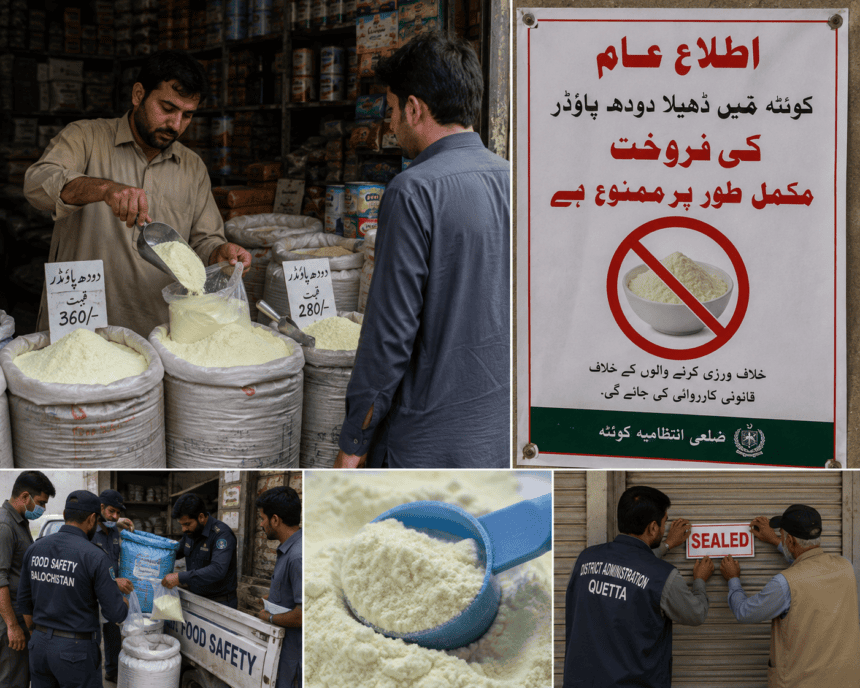
QUETTA — The provincial food authority has officially banned the sale of loose powdered milk across Quetta, citing severe concerns over hygiene and rampant adulteration. The move follows a series of laboratory tests that found the bulk product frequently contaminated with chalk, starch, and industrial-grade chemicals.
For years, loose powdered milk has been a staple in low-income households across the city. Sold by the kilogram in open sacks, it offers a cheaper alternative to branded, sealed tins. But the cost-saving comes at a price. According to local food safety inspectors, the open-air storage conditions in markets often expose the powder to moisture, insects, and bacteria long before it reaches the consumer.
“We aren’t just looking at poor storage,” said a senior inspector with the Balochistan Food Authority (BFA). “We’re finding materials in these sacks that aren’t even food-grade. People are essentially feeding their children chemicals under the guise of milk.”
The BFA launched a week-long crackdown across major markets, including Liaquat Bazaar and Prince Road, seizing hundreds of kilograms of the product. Shopkeepers caught selling the loose powder now face heavy fines, and the authority has warned that repeat offenders will face permanent closure of their businesses.
The decision has left many small retailers scrambling. Many argue that the ban unfairly targets the poor, who rely on the lower price points of loose goods. However, health experts argue that the public health implications—ranging from chronic digestive issues to long-term nutritional deficiencies—make the status quo unsustainable.
The authority is now shifting its focus to the supply chain, tracing the origins of these shipments. Preliminary investigations suggest much of the contaminated powder enters the city through unregulated routes from bordering districts, often repackaged in nondescript bags to avoid scrutiny.
As the ban takes hold, the BFA has directed retailers to stock only sealed, registered brands that meet national food safety standards. Whether this will drive up costs for the average shopper remains the primary concern, but for now, the city’s markets are under strict surveillance to ensure the loose powder stays off the shelves.