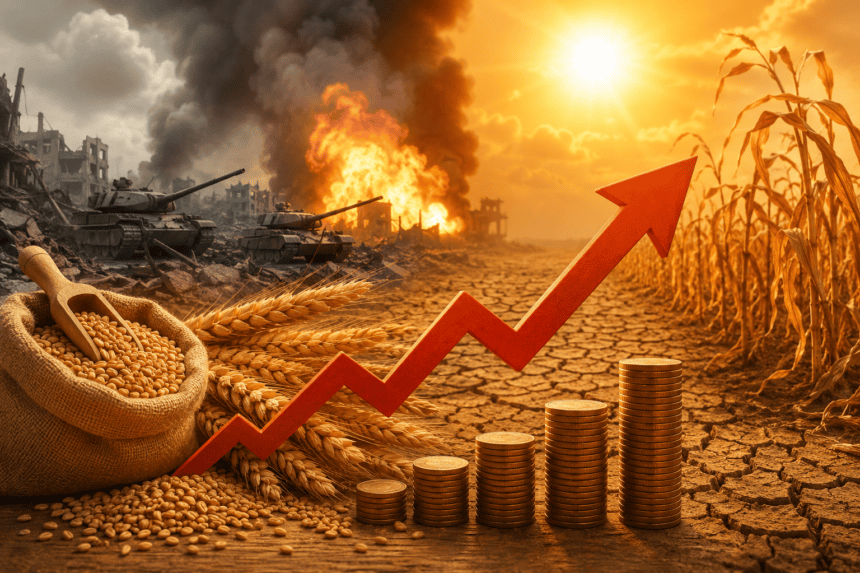
Wheat prices are climbing again, hitting levels not seen in months. The spike isn’t driven by a single event, but by a volatile mix of war-torn supply chains and extreme weather patterns crippling major export hubs.
The breadbasket of the world is struggling. Russia’s continued war in Ukraine remains the primary friction point. Black Sea exports, once the bedrock of global food security, face constant disruption from maritime strikes and insurance premiums that have climbed to prohibitive levels for many shippers.
Then there is the heat.
France and Germany—major European producers—recently saw their worst harvests in years due to excessive rainfall followed by heatwaves. Across the Atlantic, the U.S. Great Plains are grappling with persistent drought, forcing traders to bet on tighter supplies heading into the winter months. It’s a supply-side squeeze that doesn’t have an immediate relief valve.
“The market is pricing in a permanent state of emergency,” said an agricultural commodities analyst based in Chicago. “We’ve moved past the phase where a single good harvest fixes the global deficit. The infrastructure to move that grain is just as broken as the climate patterns affecting it.”
The impact is hitting import-dependent nations hardest. Countries in North Africa and the Middle East, which rely heavily on Black Sea shipments, are already seeing domestic bread prices climb. Governments there are scrambling to secure long-term contracts, further tightening the global supply available on the open market.
For the average consumer, this means the cost of basic staples—flour, bread, pasta—isn’t coming down anytime soon. Retailers are already signaling that the wholesale costs they’re absorbing will eventually reach the checkout line.
There is no sign of a diplomatic thaw in the Black Sea, and weather models suggest the current climatic instability is the new norm. Markets are now bracing for a long-term inflationary cycle in food prices that could outlast the current geopolitical crisis.