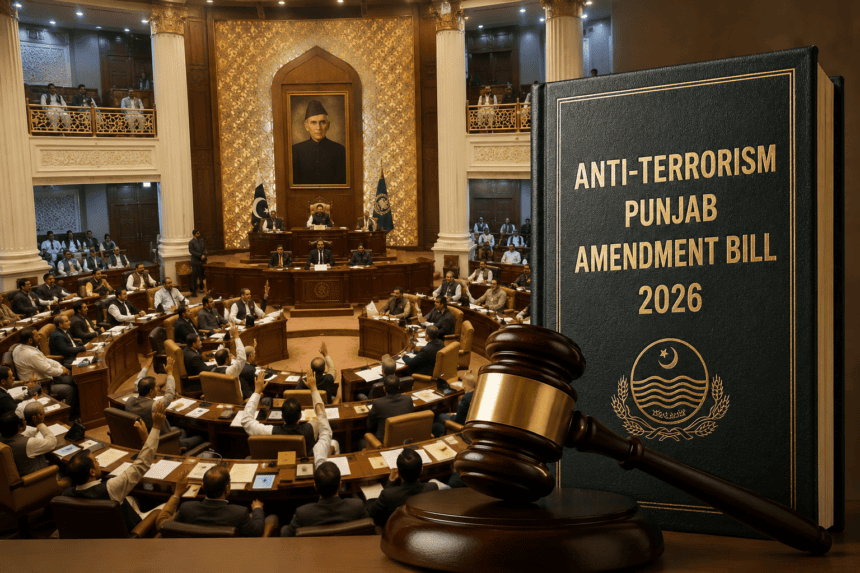
LAHORE — The Punjab Assembly pushed through the Anti-Terrorism (Punjab Amendment) Bill 2026 on Tuesday, handing provincial law enforcement expanded authority to detain suspects and seize assets without immediate judicial oversight. The bill passed despite a vocal walkout by opposition members who labeled the move a “direct assault” on civil liberties.
The legislation allows police to hold suspects for up to 60 days without charge if they are deemed a “threat to public order.” Previously, the legal limit for preventive detention was significantly shorter, requiring a magistrate’s review within 24 hours. The new amendment streamlines the process, effectively removing the judiciary from the initial decision-making chain.
For the provincial government, the bill is a necessary response to shifting security challenges. “We aren’t creating new laws for the sake of it,” the provincial law minister told the house shortly before the vote. “We are closing the gaps that terrorists use to exploit our legal system. If the state is to be protected, the police need the tools to act before a tragedy occurs.”
Critics inside and outside the assembly argue the language is dangerously broad. Legal experts point out that the definition of “threat to public order” remains loosely defined, potentially inviting abuse against political dissenters or peaceful protestors.
“The bill essentially turns the police into judge, jury, and jailer,” said a senior advocate at the Lahore High Court. “By bypassing the magistrate, we’ve removed the only real check on potential police overreach. This isn’t just about counter-terrorism; it’s about control.”
The bill also grants the provincial government the power to freeze bank accounts and seize property of individuals suspected of funding “unlawful activities” without a prior court order. While the government claims this will choke off the financial lifelines of militant cells, human rights groups worry about the lack of an immediate appeals process for those whose assets are frozen erroneously.
Government officials maintain that judicial oversight is not being abolished, merely deferred. They argue that post-detention reviews will remain in place, and that courts can still intervene if a case is found to be politically motivated.
The opposition, however, remains unconvinced. As the assembly session concluded, several lawmakers vowed to challenge the constitutionality of the amendment in the Supreme Court, arguing that the bill violates fundamental rights guaranteed under the Constitution.
For now, the provincial police are preparing to implement the new protocols. Whether these powers will be used to dismantle terror networks or to stifle local opposition remains the primary tension in Punjab’s political landscape.