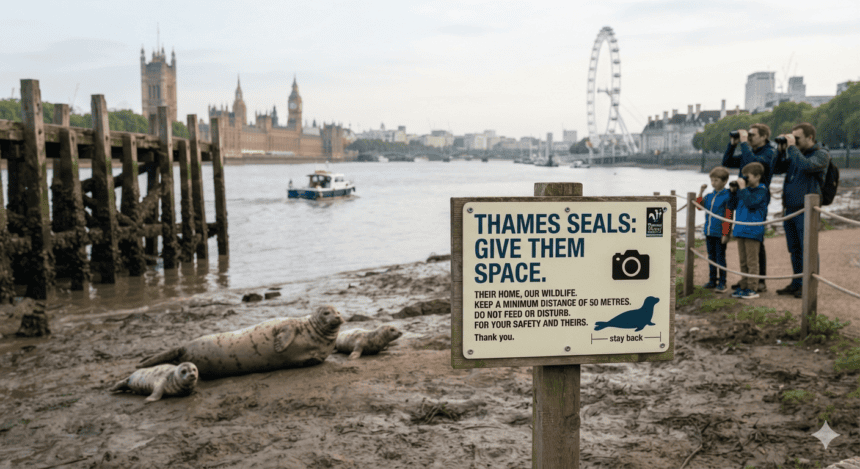
The Port of London Authority and conservationists are issuing a blunt warning to visitors along the Thames: stop trying to get close to the seals. As sightings of harbor and grey seals increase in the inner estuary, so does the risk of human-wildlife conflict.
It’s not just about the animal’s stress. A seal might look like a docile mascot for the river, but they are apex predators with teeth designed to crush fish. When people crowd them for a smartphone photo or try to feed them, the animals don’t see a fan; they see a threat.
“These are wild animals, not pets,” said a spokesperson for the Zoological Society of London. “If a seal feels cornered, it will bite. A bite from a seal is not a minor scratch—it carries a cocktail of bacteria that leads to severe, rapid infection.”
The problem has spiked as more seals haul out on the riverbanks to rest and molt. These “haul-outs” are vital for their health. When a dog off its leash or a curious tourist approaches, the seal’s instinct is to bolt back into the water. This unnecessary energy expenditure can be fatal for younger or weaker seals, particularly during colder months when they need to conserve their strength.
Local authorities are now stepping up patrols near popular spots like Richmond and Teddington. The guidance is simple: keep dogs on leads, stay at least 50 meters away, and never attempt to feed them.
The Thames has seen a genuine recovery in marine life over the last two decades, with seal populations stabilizing as the water quality improved. But that success story is becoming a liability. The more comfortable the seals get with humans, the more likely they are to approach boats or piers, putting themselves in the path of propellers and hazardous debris.
The message from the riverbank is clear: enjoy the spectacle, but keep your distance. If you see a seal that appears injured or entangled, don’t play hero. Call the British Divers Marine Life Rescue instead.
Let them rest. Their survival depends on it.