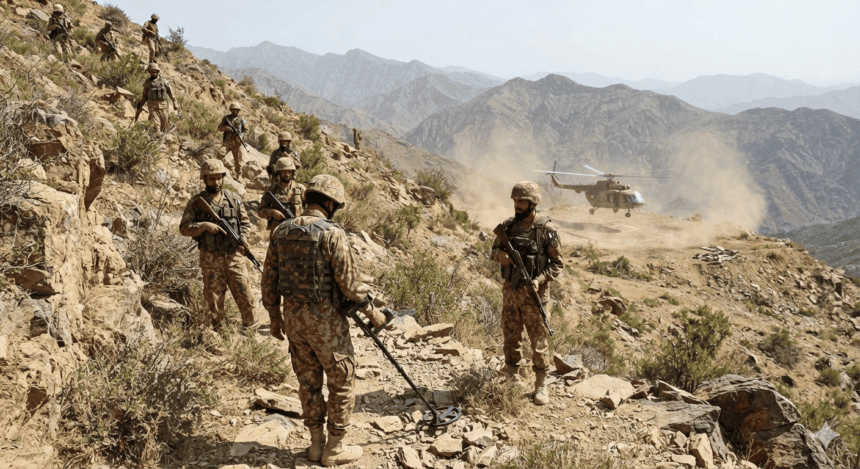
Security forces killed 21 militants during a series of intelligence-based operations in Khyber Pakhtunkhwa, the military’s media wing confirmed today. The Inter-Services Public Relations (ISPR) stated the operations, conducted across various districts, dealt a major blow to militant networks operating in the region.
The military identified those killed as “khawarij”—a term used by the state to describe TTP-linked insurgents. These individuals, according to the ISPR, were involved in multiple attacks on security personnel and civilians.
The operations come at a time when the province is grappling with a sharp uptick in violence. Over the past several months, KP has seen a surge in targeted attacks, roadside bombings, and ambushes. For the local population, the security situation remains volatile; many residents continue to live under the shadow of persistent threats from militant groups regrouping along the border regions.
While the ISPR claims these strikes successfully neutralized key commanders and disrupted insurgent logistics, analysts warn that the underlying drivers of the unrest remain unaddressed. The military has intensified its presence in the tribal districts, but the porous border and local support networks continue to complicate the state’s counter-terrorism strategy.
Security experts suggest that while tactical successes like these are vital, they offer only a temporary respite. The core challenge for the military command in Rawalpindi remains the long-term stabilization of these districts and the prevention of militant recruitment in areas where the state’s writ has frequently been challenged.
The ISPR statement emphasized that the clearance operations would continue until the threat is eliminated. For now, the military maintains its hold on the affected sectors, though the cost of the ongoing campaign continues to mount, both in terms of resources and the human toll on the security forces themselves.