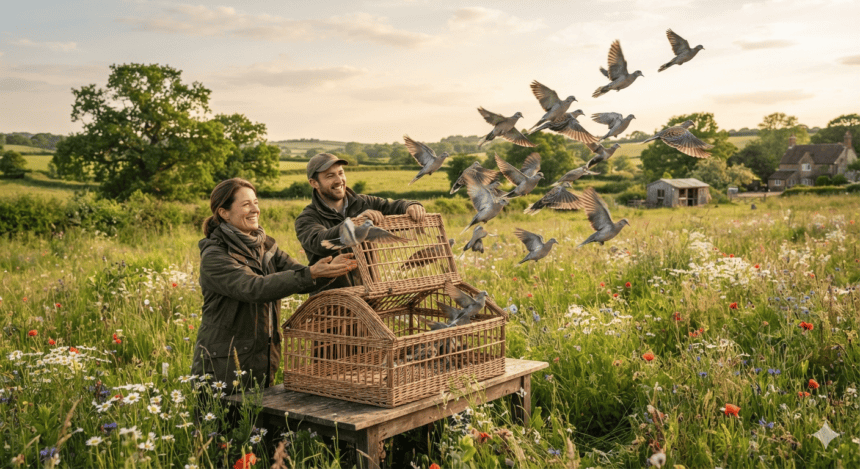
The European turtle dove is returning to the English countryside. Conservationists released 15 captive-bred birds into the wild this week, a desperate attempt to pull the species back from the brink of regional extinction.
Once a common sight across UK farmland, the turtle dove population has plummeted by 99% since the 1970s. The decline is sharp, steady, and relentless. Habitat loss, intensive farming, and the disappearance of wild seeds—the bird’s primary food source—have left the species struggling to survive.
The release, led by the Pensthorpe Conservation Trust and the RSPB, marks the first time this specific method has been used for the species in Britain. These birds were raised in aviaries designed to mimic natural conditions, ensuring they were prepared for the risks of the wild.
“We are essentially trying to jump-start a population that has been decimated,” said one lead researcher involved in the project. “It’s a high-stakes gamble, but doing nothing was no longer an option.”
The birds are fitted with satellite tags. Teams are tracking their movements, hoping they will join existing wild flocks and eventually contribute to the breeding pool. Critics of the project have pointed to the root causes—arguing that releasing birds into a landscape that lacks sufficient hedgerows and seed-rich weeds is merely a stopgap.
Government-led agri-environment schemes have attempted to restore these habitats for years, yet the numbers have failed to rebound. The release serves as a litmus test for whether interventionist conservation can succeed where habitat restoration alone has stalled.
For now, the 15 birds are navigating the Norfolk countryside. Their survival over the coming months will determine if this program expands or if the turtle dove’s song will truly vanish from the British landscape for good.