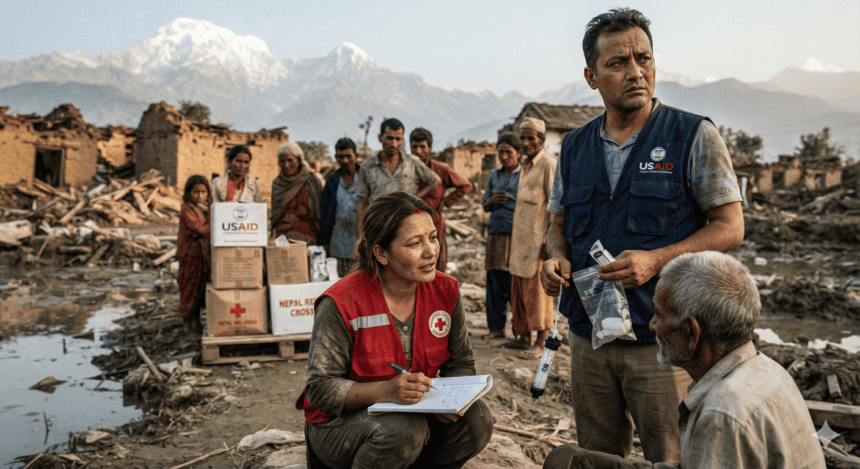
KATHMANDU — The monsoon rains stopped weeks ago, but the destruction remains etched into the landscape of Nepal’s Sindhupalchok district. For local relief workers, the physical scars of the floods are now being compounded by a financial reality: the pipeline of American aid is drying up.
President-elect Donald Trump’s signaled intent to slash foreign assistance programs, specifically USAID’s global health and disaster resilience budgets, has sent a chill through NGOs operating on the ground in the Himalayas. Projects that once relied on multi-year U.S. commitments are already facing “austerity mode” before the next fiscal year even begins.
“We aren’t talking about bureaucratic shifts; we are talking about concrete projects that stop mid-pour,” said a field coordinator for a Kathmandu-based disaster relief agency, who requested anonymity due to the sensitivity of ongoing contract negotiations. “If the funding stops, the early warning systems we installed in the river basins become nothing more than expensive, unmaintained scrap metal.”
The stakes are immediate. Nepal remains one of the world’s most climate-vulnerable nations, with geography that turns moderate rainfall into catastrophic landslides. USAID has historically been the primary backer for community-led infrastructure—strengthening river embankments and training local first responders.
While Washington debates the merits of “America First” fiscal policy, the disconnect is palpable in the field. Relief workers argue that the cost of prevention is a fraction of the cost of total reconstruction. Yet, the current climate in D.C. prioritizes domestic spending over the stabilization of remote, high-altitude regions halfway across the globe.
Local officials are now scrambling to find alternative donors, but the reality is grim. European and Asian aid packages often come with heavier administrative burdens and slower deployment times compared to the established USAID infrastructure.
For the families in Sindhupalchok, the geopolitical shift in the U.S. capital translates to a direct loss of security. They are watching the horizon not just for the next storm, but for the news that the support keeping their villages habitable is no longer coming.
“They call it a budget adjustment,” the coordinator said. “For us, it’s the end of a safety net we’ve spent a decade building.”