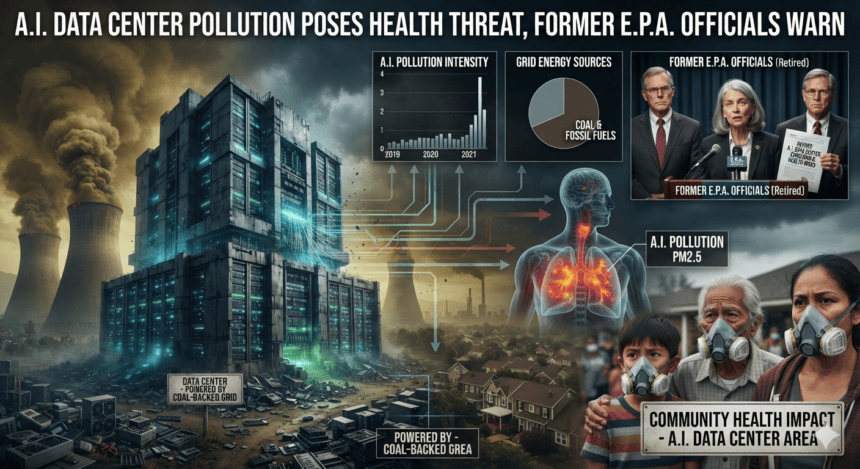
Data centers powering the artificial intelligence boom are becoming a public health liability, according to a coalition of former Environmental Protection Agency officials. These facilities, once viewed as silent, low-impact infrastructure, are increasingly under fire for the localized pollution they pump into surrounding neighborhoods.
The core issue lies in the massive, round-the-clock energy demand of AI training and inference. To keep servers cool, facilities rely on complex HVAC systems that often utilize chemical refrigerants and, in many cases, on-site diesel generators for backup power. When these generators kick in during grid instability or high-demand periods, they release nitrogen oxides, particulate matter, and other pollutants directly into the air breathed by nearby residents.
“We are seeing a trend where the infrastructure of the future is being built on the environmental failures of the past,” said one former EPA policy advisor involved in the report. “The speed of AI deployment is outstripping the regulatory framework meant to keep the air breathable.”
The danger is not theoretical. In states like Virginia—the world’s largest data center hub—residents living near these clusters report increased respiratory issues and noise pollution. The industry often claims these facilities are “green” because they purchase renewable energy credits, but those credits do nothing to mitigate the physical smog and particulate matter emitted by the physical hardware cooling systems or emergency backup diesel engines.
Regulatory agencies are currently struggling to bridge the gap. Most data centers are permitted under outdated zoning laws that fail to account for the unique, intense, and localized pollution spikes associated with high-density computing. As AI companies race to build larger campuses, the EPA’s former brass warn that the current “build first, regulate later” approach is leaving frontline communities to pay the health costs of Silicon Valley’s ambition.
For tech giants, the challenge is clear: they can no longer treat the physical footprint of their software as an afterthought. If the AI sector cannot reconcile its power-hungry cooling systems with air quality standards, it faces a mounting wave of litigation and public health mandates that could stall the very growth it is currently scrambling to achieve.