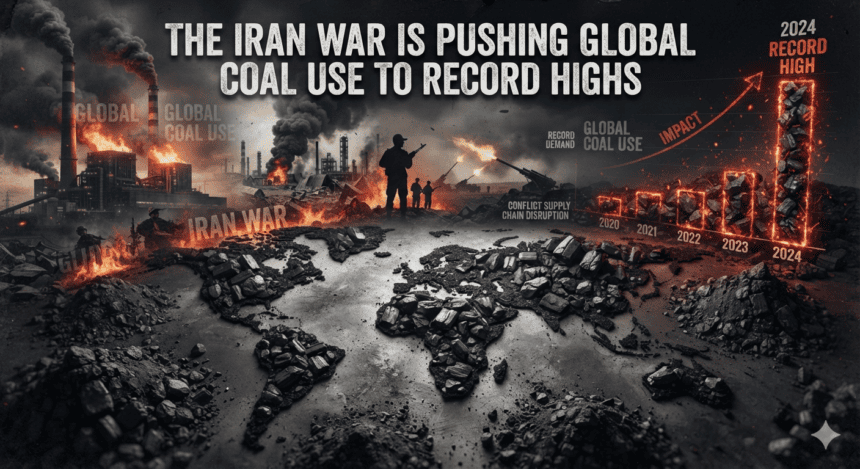
Global coal consumption has surged to record levels, driven by the widening conflict in the Middle East and the resulting volatility in natural gas supplies. As geopolitical instability chokes traditional energy trade routes, nations are reverting to coal to ensure basic grid reliability.
The shift isn’t a long-term strategic pivot; it’s a desperate reaction to market shocks. When the conflict in Iran and the broader Middle East threatened the stability of liquefied natural gas (LNG) shipments, price spikes forced power providers in Asia and Europe to scramble for alternatives. Coal—previously slated for a slow, managed phase-out—suddenly became the only affordable, readily available option to prevent rolling blackouts.
Data from the International Energy Agency confirms the trend. Global coal demand eclipsed 8.5 billion tonnes last year, and the momentum has carried into the current cycle. While renewable capacity is expanding, it isn’t scaling fast enough to replace the baseload power lost when gas prices fluctuate wildly under the pressure of regional war.
“Energy security has overtaken climate targets in the immediate hierarchy of national interests,” said a senior energy analyst at a leading global consultancy. “Governments aren’t choosing coal because they want to; they’re choosing it because they’re terrified of the economic fallout that comes with a power shortage.”
The consequences are hitting the climate agenda hard. Emissions from the power sector are rising again, reversing years of incremental progress. In India and China, the world’s two largest coal consumers, domestic mining operations have been ramped up to unprecedented levels to shield their industrial bases from the uncertainty of imported fuel prices.
Meanwhile, shipping lanes in the Red Sea and the Persian Gulf—critical arteries for global energy—remain fraught with risk. Insurance premiums for tankers have climbed, and the logistical nightmare of rerouting vessels has made imported gas prohibitively expensive for emerging markets. Coal, often sourced domestically or from nearby regional suppliers, offers a buffer against these maritime bottlenecks.
The irony is sharp: the same instability that is driving up defense spending and humanitarian aid costs is effectively anchoring the global economy to the most carbon-intensive fuel source available.
Until the regional conflict in the Middle East finds a path to de-escalation, the global energy transition remains stalled by the sheer necessity of keeping the lights on. For now, the world is burning more coal than ever, not out of preference, but out of a lack of better options.