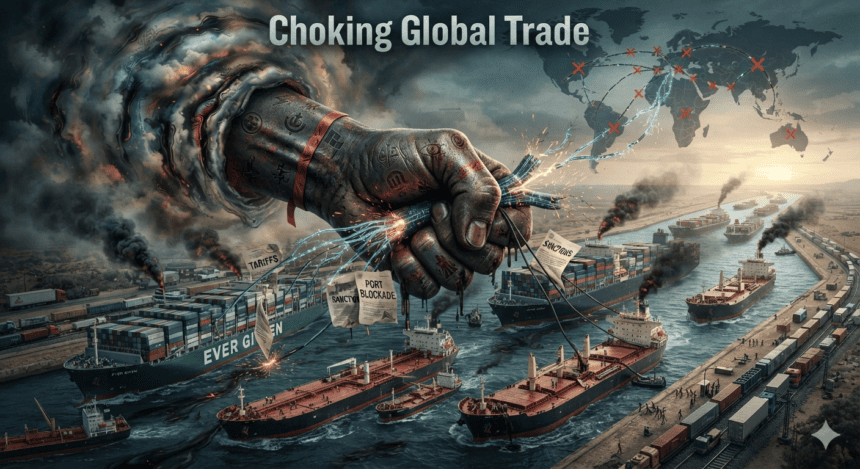
Global trade is buckling under the weight of a sustained security crisis in the Red Sea. What began as a regional fallout from the conflict in Gaza has metastasized into a logistical nightmare, forcing the world’s largest shipping lines to abandon the Suez Canal entirely.
The numbers are stark. Transit volume through the Suez—a waterway that handles roughly 12% of global trade—has plummeted by more than 50% since the Houthi militant group began targeting commercial vessels late last year. Ships are now rerouting around the Cape of Good Hope, adding nearly 4,000 miles and up to two weeks to their voyages.
This isn’t just about longer transit times. It’s about the brutal math of the shipping industry.
Fuel costs have spiked as vessels burn through thousands of extra tons of bunker oil to make up for lost time. Container shortages are reappearing in key Asian manufacturing hubs, while insurance premiums for ships traversing the Bab el-Mandeb Strait have surged to as much as 1% of the vessel’s total value—a cost that inevitably trickles down to the consumer.
“We are seeing a systemic shift in how goods move,” says a senior analyst at a major London-based maritime consultancy. “Companies that operated on ‘just-in-time’ delivery models for decades are now scrambling to build inventory buffers. That isn’t free. It’s inflationary.”
The automotive and retail sectors are already feeling the pinch. Tesla recently paused production at its German Gigafactory for two weeks, citing a lack of components delayed by the shipping reroutes. Retailers, meanwhile, are bracing for higher freight charges to be passed on to shoppers by the second quarter of the year.
Military intervention, specifically the U.S.-led ‘Operation Prosperity Guardian,’ has failed to deter the attacks. Despite regular airstrikes on Houthi infrastructure in Yemen, the militants remain undeterred, utilizing low-cost drones and anti-ship missiles to disrupt high-value assets.
The economic fallout is no longer a temporary disruption; it is the new baseline. As long as the Red Sea remains a combat zone, the global economy will continue to pay a heavy premium to keep the lights on and the shelves stocked.
For the shipping industry, the path forward is clear: until the security situation stabilizes, the extra miles at sea are the only way to avoid the line of fire.