ISLAMABAD — A senior Pakistan Tehreek-e-Insaf (PTI) leader, Aslam Ghuman, has publicly asserted that the party’s incarcerated founder will likely be released from prison before the end of this year.
The statement, delivered during a recent interaction with the media, injects a new layer of uncertainty into the ongoing legal and political battles surrounding the former prime minister. While party leadership has frequently spoken of “imminent” relief, Ghuman’s specific timeline marks a shift toward a more defined, albeit optimistic, projection.
The PTI founder remains behind bars at Adiala Jail, facing a series of legal cases ranging from state secrets to corruption allegations. His legal team continues to challenge these convictions in higher courts, arguing that the proceedings are politically motivated attempts to sideline him from the national political landscape.
Legal analysts, however, remain cautious. The path to release requires significant judicial breakthroughs, specifically in the high-profile cases currently under appeal. While the Supreme Court and Islamabad High Court have granted relief in several instances, the sheer volume of pending charges means any potential release is contingent on a complex series of legal victories rather than a singular event.
Government officials have consistently dismissed claims of a back-door deal or a “soft” exit for the former leader. Ministers have maintained that the judiciary is operating independently and that the PTI founder must face the full weight of the law, regardless of his political standing or his party’s public assertions.
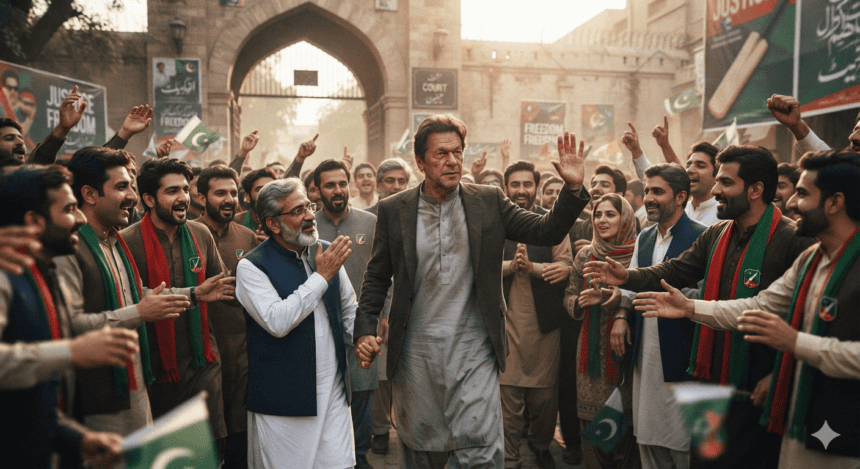
For the PTI, the messaging is clear: keep the base energized. By floating a specific timeline for his return, party leaders aim to maintain momentum among supporters who see his imprisonment as a rallying point. Yet, the gap between political rhetoric and the realities of the courtroom remains wide.
As the year progresses, the focus will shift to upcoming hearings. Whether Ghuman’s prediction holds weight or becomes another instance of political posturing depends entirely on the bench, not the party podium.