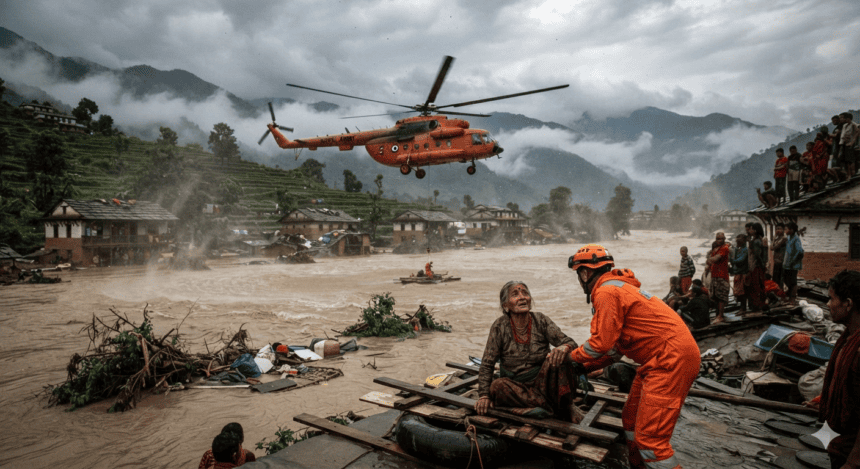
KATHMANDU — A sudden drop in temperature is providing a desperate, if narrow, window for rescue crews scrambling through the mud-choked valleys of Nepal. After days of relentless monsoon rains that turned mountain streams into lethal torrents, the cooling air has finally thinned the thick, humid fog that grounded helicopters and stalled ground teams for nearly 72 hours.
The shift in weather is more than a meteorological footnote; it is the only variable keeping the search-and-rescue mission alive.
“The mist was so heavy we couldn’t see the tail rotor from the cockpit,” said a pilot with the Nepal Army aviation wing. “Now, we have a clear line of sight to the ridges. We’re moving every bird we have into the air before the clouds roll back in.”
The stakes are grim. According to the National Disaster Risk Reduction and Management Authority, the death toll has climbed past 200, with dozens still unaccounted for in the worst-hit districts of Kavrepalanchok and Lalitpur. Entire hamlets were erased when hillsides gave way, burying homes under tons of debris.
For the families waiting on the outskirts of the disaster zone, the cooling wind brings a mix of hope and agony. They watch the sky, waiting for the distinct thrum of rotors that might signal a miracle. But the geography remains an unforgiving adversary. Many of the hardest-hit areas are accessible only by air, and the ground remains a treacherous slurry of silt and shattered rock.
Government officials admit the logistics are failing to keep pace with the scale of the destruction. Bridges have been swept away, severing the arterial roads that connect remote villages to the capital. While heavy machinery has arrived at the edges of the washouts, the path forward is measured in meters per hour.
“We aren’t just fighting the weather; we’re fighting time,” said a district administrator overseeing the relief distribution. “Every hour that passes without a heat signature or a signal from the ground makes the prospect of finding survivors that much smaller.”
International aid agencies, including the Red Cross, have pivoted to delivering life-saving supplies like medical kits and water purification tablets via drones and man-portable gear. They are bracing for the secondary crisis: the inevitable spread of waterborne diseases in communities where the infrastructure has been wiped clean.
As the sun sets, the temperature is dropping toward freezing in the high-altitude zones. For those clinging to the hope of a rescue, the cold is no longer just an environmental factor — it is a ticking clock. The rescuers have their window, but they know exactly how quickly it could slam shut.