Health officials in Zambia have issued a blunt warning to citizens: do not eat meat from wild animals found dead. The directive follows a surge in anthrax cases across multiple districts, where dozens of animals have succumbed to the bacterial infection.
The Ministry of Health, working alongside the Department of National Parks and Wildlife, confirmed that the outbreak is spreading through areas where subsistence hunting and scavenging are common. Anthrax, a severe infectious disease caused by *Bacillus anthracis*, is zoonotic. It jumps from animals to humans, often with fatal consequences if left untreated.
“The risk of transmission is absolute,” a senior veterinary official told local media Tuesday. “When an animal dies of anthrax, the bacteria form spores in the soil. Opening the carcass for meat releases these spores into the air and onto the hands of anyone handling the animal.”
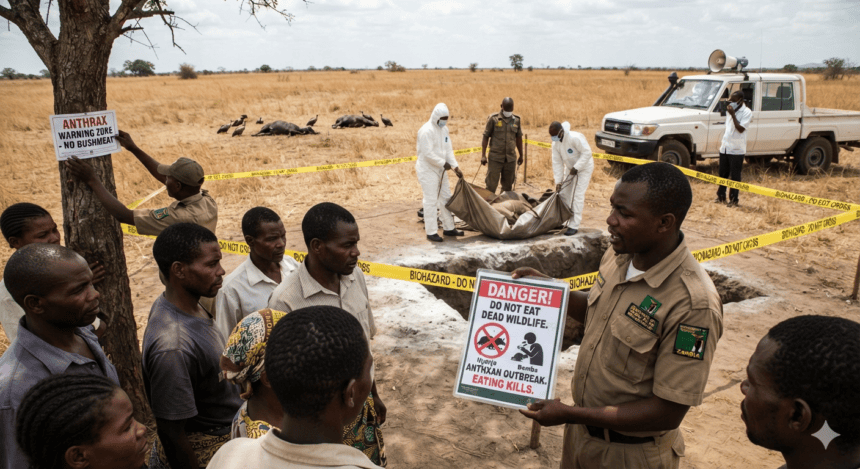
Authorities are particularly worried about remote communities where the high cost of livestock meat often leads residents to scavenge from carcasses found in the bush. The government has mobilized rapid response teams to bury infected carcasses deep underground with lime, aiming to kill the spores before they contaminate grazing lands.
The outbreak is not just a health crisis; it’s an economic one. Livestock farmers have been ordered to suspend the movement of cattle, goats, and sheep in affected regions. Markets in several districts have seen a sharp drop in sales, as the fear of contaminated meat keeps buyers away from local butchers.
While the government has stockpiled vaccines for livestock, human exposure remains the primary concern. Symptoms in humans—ranging from severe skin ulcers to respiratory failure—can emerge within days of contact with contaminated tissue.
“We have sent teams to educate village leaders,” the health ministry spokesperson said. “But the message is simple: if you see a dead animal, walk away. Reporting it to the local vet is the only safe move.”
As the death toll among wildlife continues to climb, the government’s focus remains on breaking the transmission chain. For now, the ban on consuming bushmeat in affected zones is being enforced with zero tolerance.