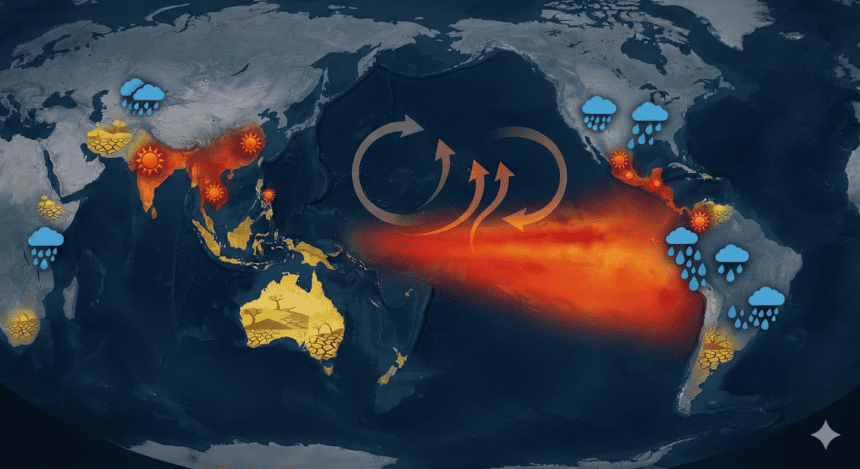
The current El Niño event has officially reached “super” status, pushing global surface temperatures to record highs and scrambling seasonal weather patterns from the Pacific to the Horn of Africa. Meteorologists confirm this cycle is among the strongest five on record, with the warming of the central and eastern tropical Pacific acting as a primary driver for climate volatility.
The impact isn’t uniform. While some regions face catastrophic flooding, others are bracing for prolonged, life-threatening drought.
In Australia and parts of Southeast Asia, the “super” designation signals severe dry spells. Agricultural yields for wheat and palm oil are already under pressure as rainfall remains well below historical averages. Farmers in these regions are now looking at their second straight season of moisture deficits, forcing governments to consider emergency water rationing.
Conversely, the Horn of Africa and the southern United States are experiencing the flip side of the coin. California and the Gulf Coast are seeing increased storm frequency, as the warmer Pacific air carries significantly more moisture into the atmosphere. Experts at the World Meteorological Organization (WMO) note that this added energy in the climate system is fueling more intense rainfall events, which often overwhelm existing drainage and flood-defense infrastructure.
The heat, however, remains the most consistent global signature.
“We are seeing a baseline shift in temperature,” said one climate researcher familiar with the Pacific monitoring data. “The ocean is holding onto this heat longer than previous cycles, which means the cooling effect we usually expect after an El Niño event is going to be delayed, if it happens at all.”
This year’s event is distinct because it follows a period of already rising ocean temperatures. The “super” status has essentially acted as an accelerant. For nations in the Global South, this translates to immediate food security risks. In parts of Southern Africa, maize crops are failing as heat stress combines with erratic rainfall, forcing humanitarian agencies to ramp up aid operations ahead of the primary harvest months.
Global shipping lanes are also feeling the friction. The Panama Canal, reliant on freshwater levels to operate its lock system, has been forced to restrict daily transit numbers due to lower water availability caused by the regional drought. This bottleneck is adding costs to global supply chains, proving that the atmospheric phenomenon is no longer just a meteorological concern — it is a direct hit to the global economy.
As the Pacific waters begin their slow, multi-month cooling process, the immediate threat isn’t the end of the event, but the lingering atmospheric instability. The coming months will determine whether this cycle breaks records for total economic damage, or if the infrastructure investments made over the last decade can hold against the pressure.